
Buying and Selecting Nursery Stock
Choosing high-quality nursery stock allows trees to establish quickly, grow evenly, and require less maintenance over their lifetime.
Using Specifications
When purchasing trees, buyers can use specifications as a clear and enforceable measure to ensure that only high-quality, structurally sound trees are delivered. Specifications describe in detail what constitutes an acceptable tree. They also establish the conditions of inspection and time of delivery. By sending the nursery a copy of the specifications document linked below, buyers can request trees that meet these exact criteria. The specifications also give buyers the right to inspect trees upon arrival and reject any that do not meet this specification.
Key benefits of high quality nursery stock:
higher survivor rates
lower replacement costs
increased canopy cover
more compatible with urban and suburban landscapes
How to order a tree
• When you first contact nurseries, send them a list of the species, quantities, and sizes of the trees you want.
• Send the specifications document linked below right away, because if the nursery doesn't have trees that meet these specifications, you won't want to buy from them.
• Even if you don't feel qualified to judge tree quality, this document will ensure that the nursery understands what you want as a discerning buyer.Key traits when inspecting nursery trees
Start by looking at the crown.
The crown is the portion of the tree beginning at the lowest main branch extending to the top of the tree.
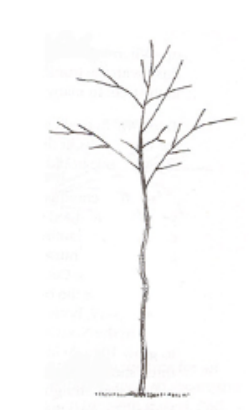
Central Leader
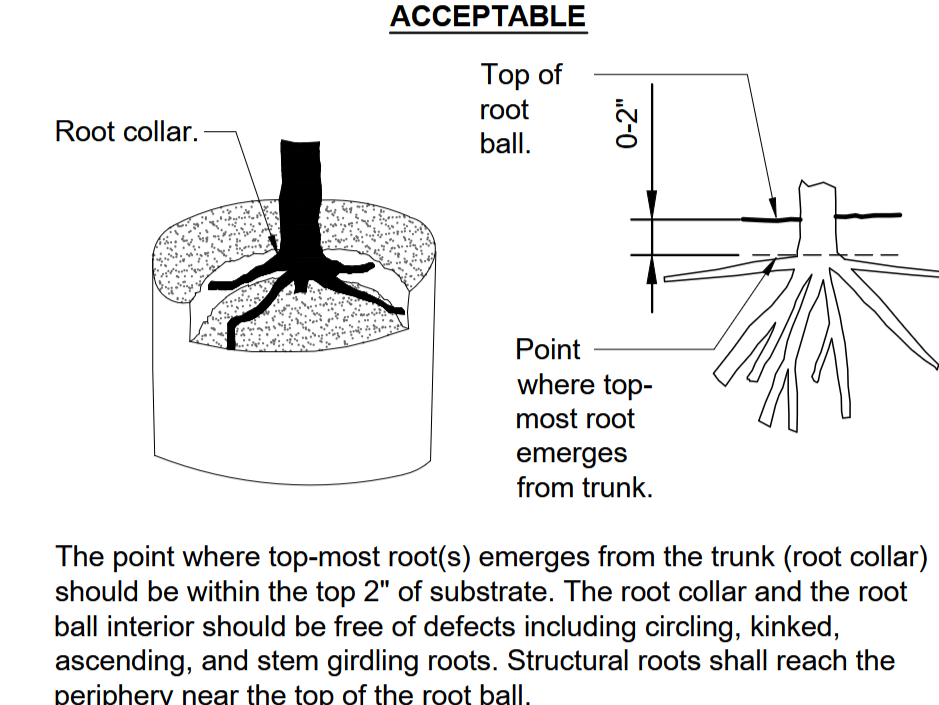
Planting quality trees begins by choosing vigorous, structurally sound trees from the nursery. Strong trees have straight roots, a thick trunk with taper, and a good branch structure appropriate for the species. Trees that become large at maturity are most durable when grown with one dominant trunk or leader to the top of the tree. The root collar or root flare (the point where the uppermost roots emerge from the trunk) should be in the top two inches of the root ball.
Making sure you have a quality tree before planting will save you a lot of time and effort.
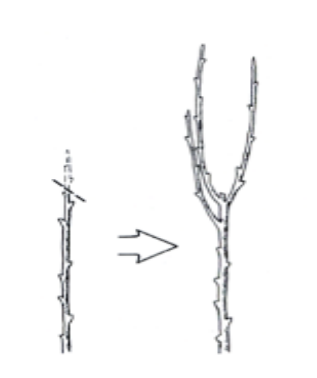
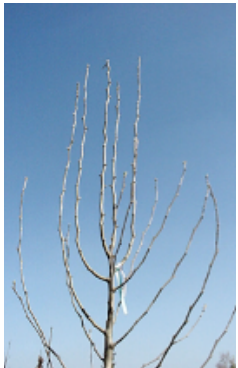
Best: Original leader is retained on the tree and has not been topped.
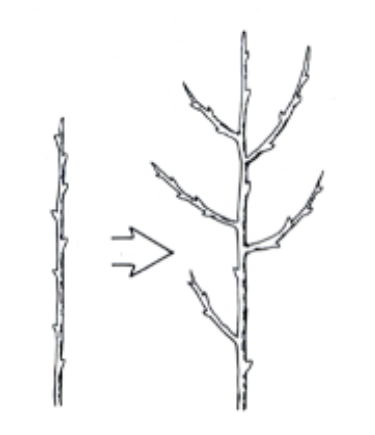
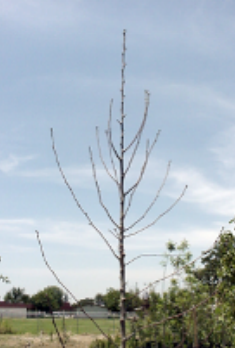
Acceptable: Original leader has been topped, but the tree has been pruned to create a new leader with at least one-half of the diameter of the original leader.
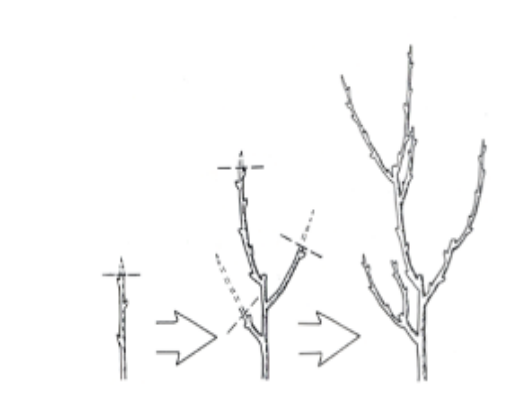
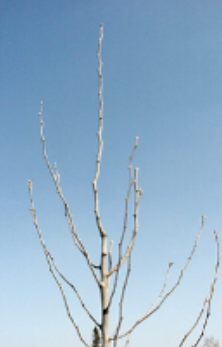
Rejectable: Original leader has been topped and there are several codominant upward growing branches.
Branch Attachment
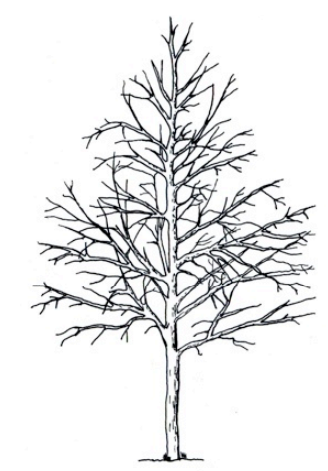
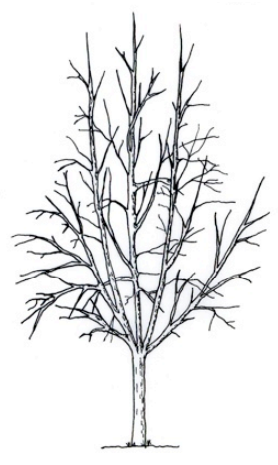
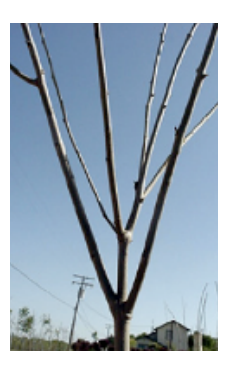
Acceptable: Main branches are evenly distributed, creating a stronger structure.
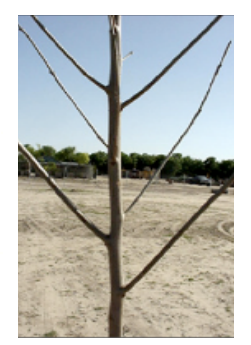
Rejectable: Main branches extend from the central leader at about the same area.
Branch Size
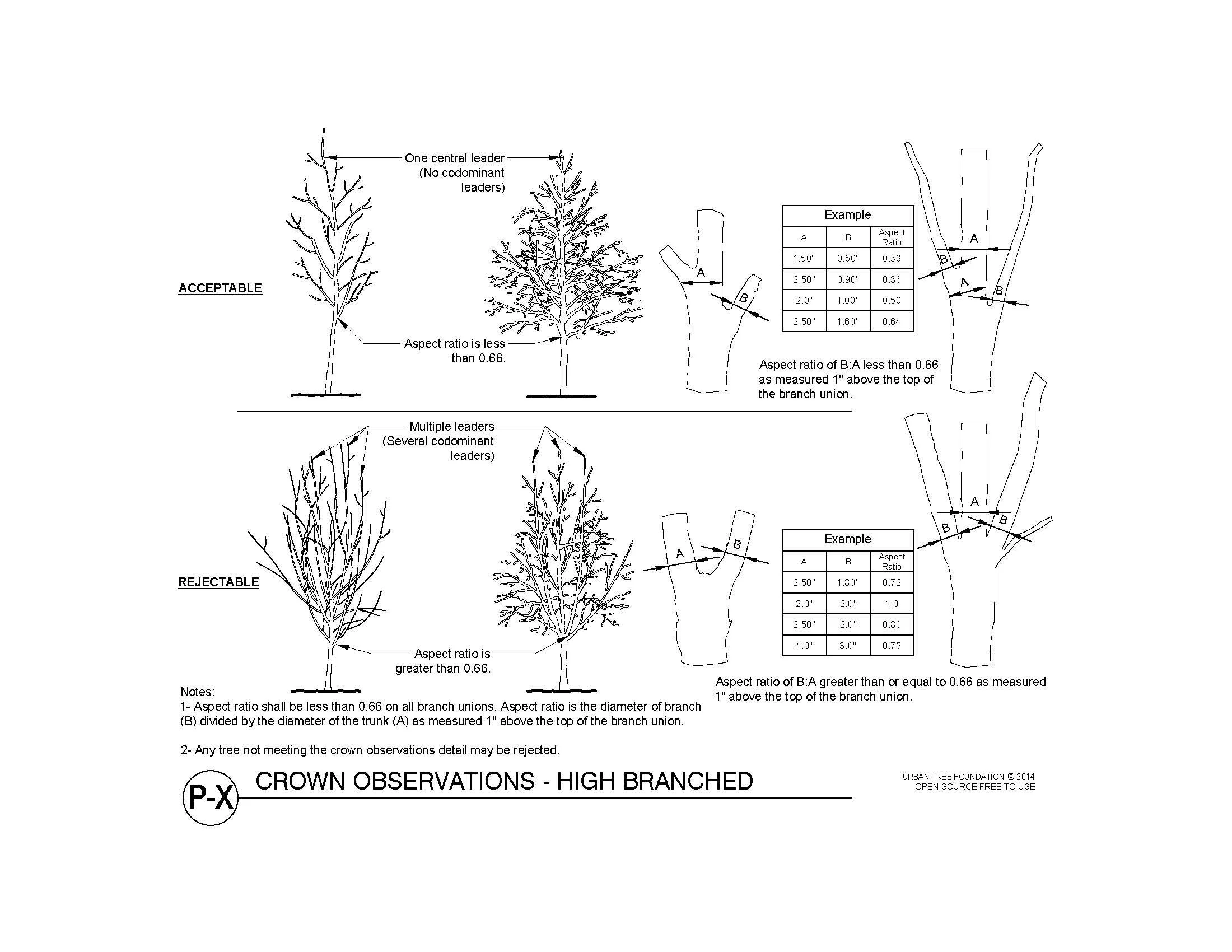
Acceptable: Branch diameter about one half the diameter of the central leader, as measured 1 inch above the branch union.
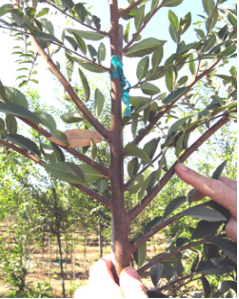
Rejectable: Branch diameter is larger than two-thirds the diameter of the central leader, as measured 1 inch above the branch union.
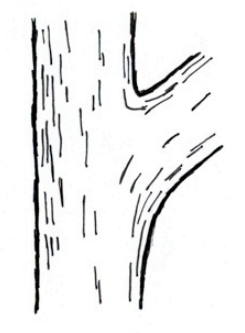
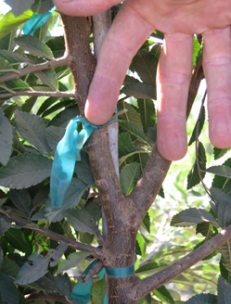
Inclusions
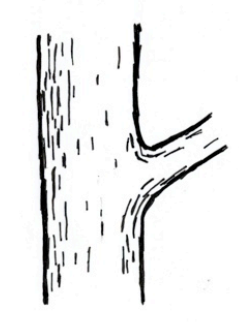
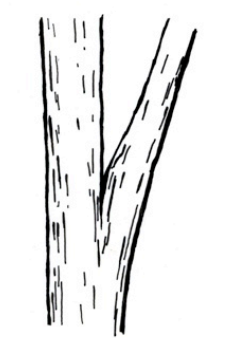
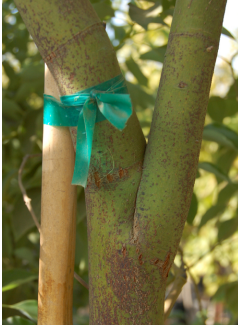
Inclusions are bark embedded in the union between a branch and the trunk or between two or more stems that weakens the union by preventing the formation of a normal branch bark ridge.
Acceptable: The branch extends away from the trunk and a bark ridge forms at the juncture.
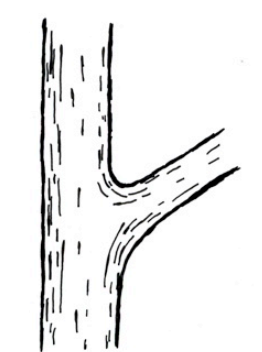
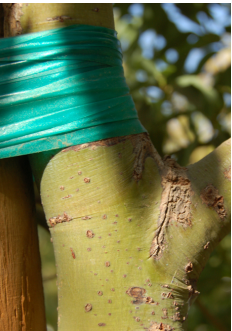
Rejectable: Bark appears to be growing inward at the attachment point, indicating a weak attachment.
Temporary Branches
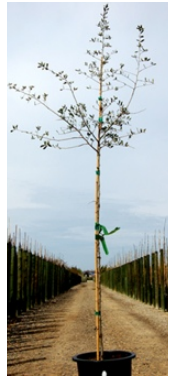
Acceptable: Small (<3/8”) branches are present on the trunk below the lowest main branch.
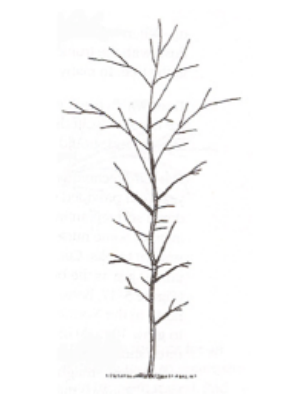
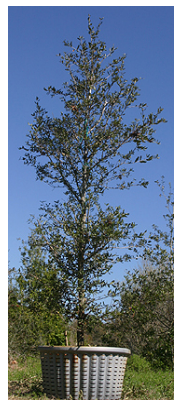
Rejectable: The lower portion of the trunk is bare. Clear trunk takes up more than 40% of the total height of the tree.
Look at the tree trunk.
The trunk is the main stem of a tree, beginning at the root collar and ending where branches begin.
Trunk is free of wounds, conks, sunburned area, and signs of insect damage
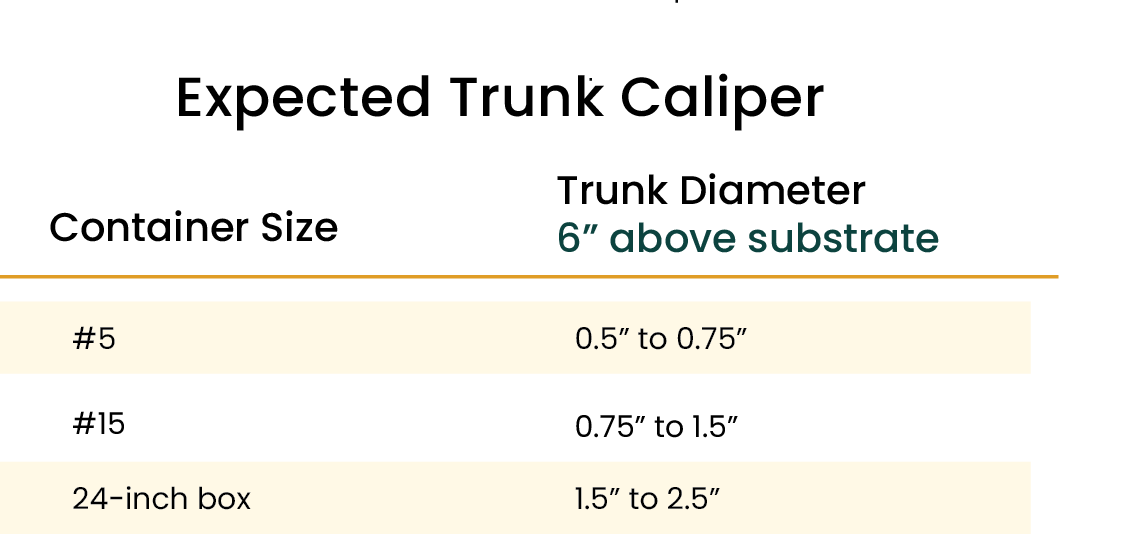
Caliper (trunk diameter)
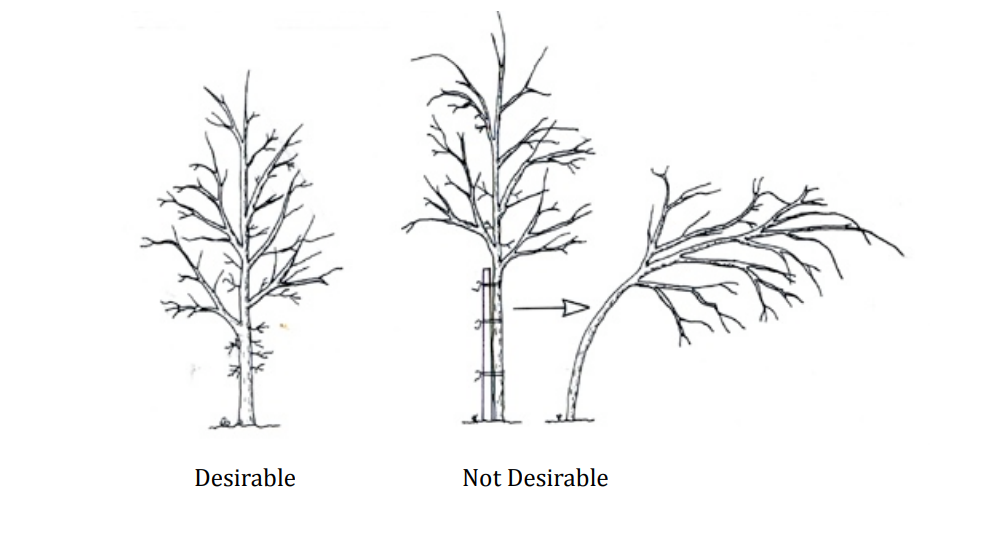
Tree trunk is thick enough with enough taper for the tree to remain vertical without a stake. Trees in #5 containers may require stakes to hold them erect.
Check on the roots.
Root Defects
Acceptable: The root collar and the inside portion of the root ball are free of defects, including circling, kinked, and stem girdling roots.
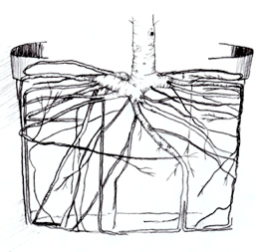
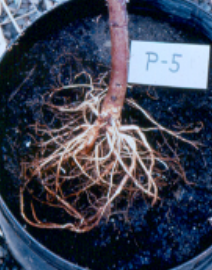
Rejectable: The root ball has been imprinted by the smaller propagation container causing defects including circling, kinked, and stem girdling roots hidden on the interior.
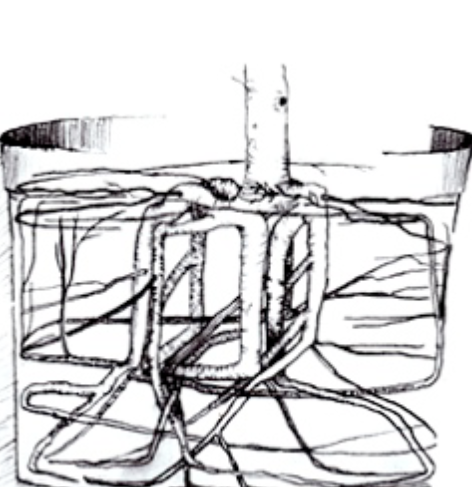
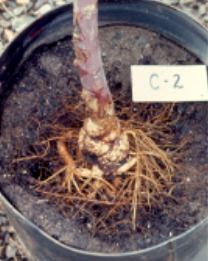
A defected root system may inhibit the growth of a tree, cause it be unstable, or lead to its death.
Root Distribution
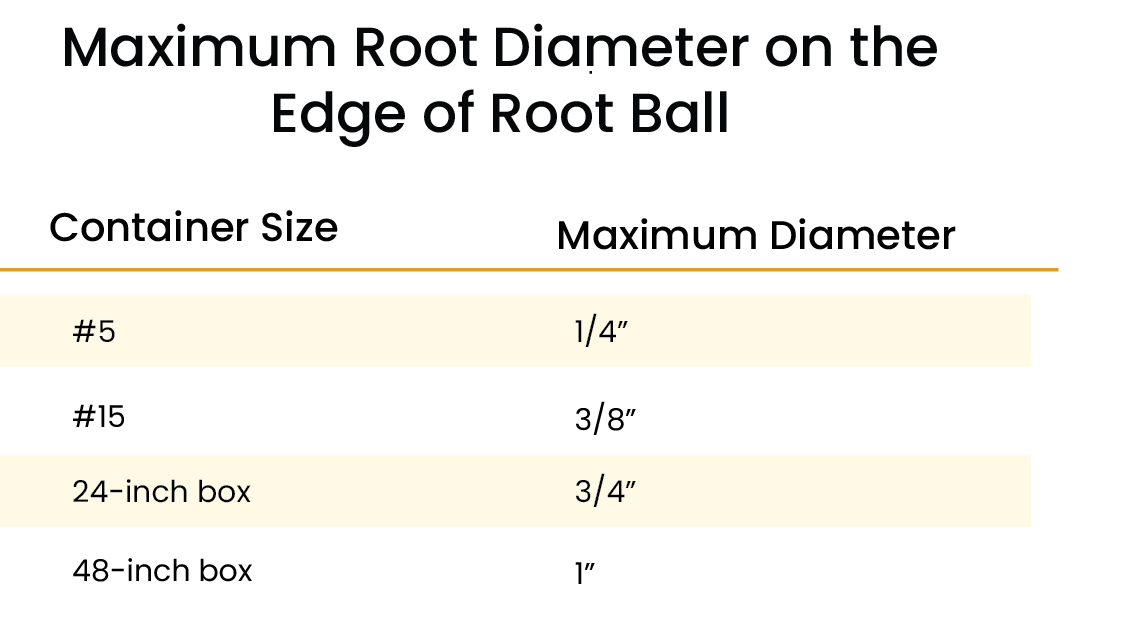
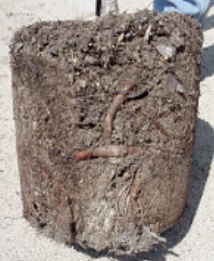
Acceptable: : Roots on the periphery and bottom of the root ball have a diameter less than indicated in the chart below. The maximum acceptable root diameter on the periphery should be indicated in the nursery stock specification.
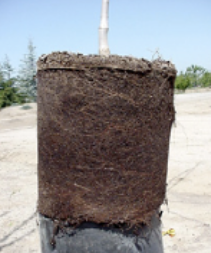
Rejectable: Roots on the periphery and bottom of the root ball have a diameter more than indicated in the chart below. The maximum acceptable root diameter on the periphery should be indicated in the nursery stock specification.
Root Moisture and Distribution
The tree shall be well rooted in the soil media (substrate). Root distribution shall be uniform throughout the container media. Structure and growth shall be appropriate for the species/cultivar. When the container is removed, the root ball shall remain intact. When the trunk is lifted both the trunk and root system shall move as one.
At the time of inspection and delivery, the root ball shall be moist throughout. The crown shall show no signs of moisture stress as indicated by wilted, shriveled, or dead leaves or branch dieback. The roots shall show no signs of excess substrate moisture as indicated by poor root growth, root discoloration, distortion, death, or foul odor.
Tree Selection Details and Specifications
-
![Technical diagram for tree stake installation including plan and section views. It shows a young tree with ties, pine stakes, and bamboo poles for support, indicating proper placement and measurements.]()
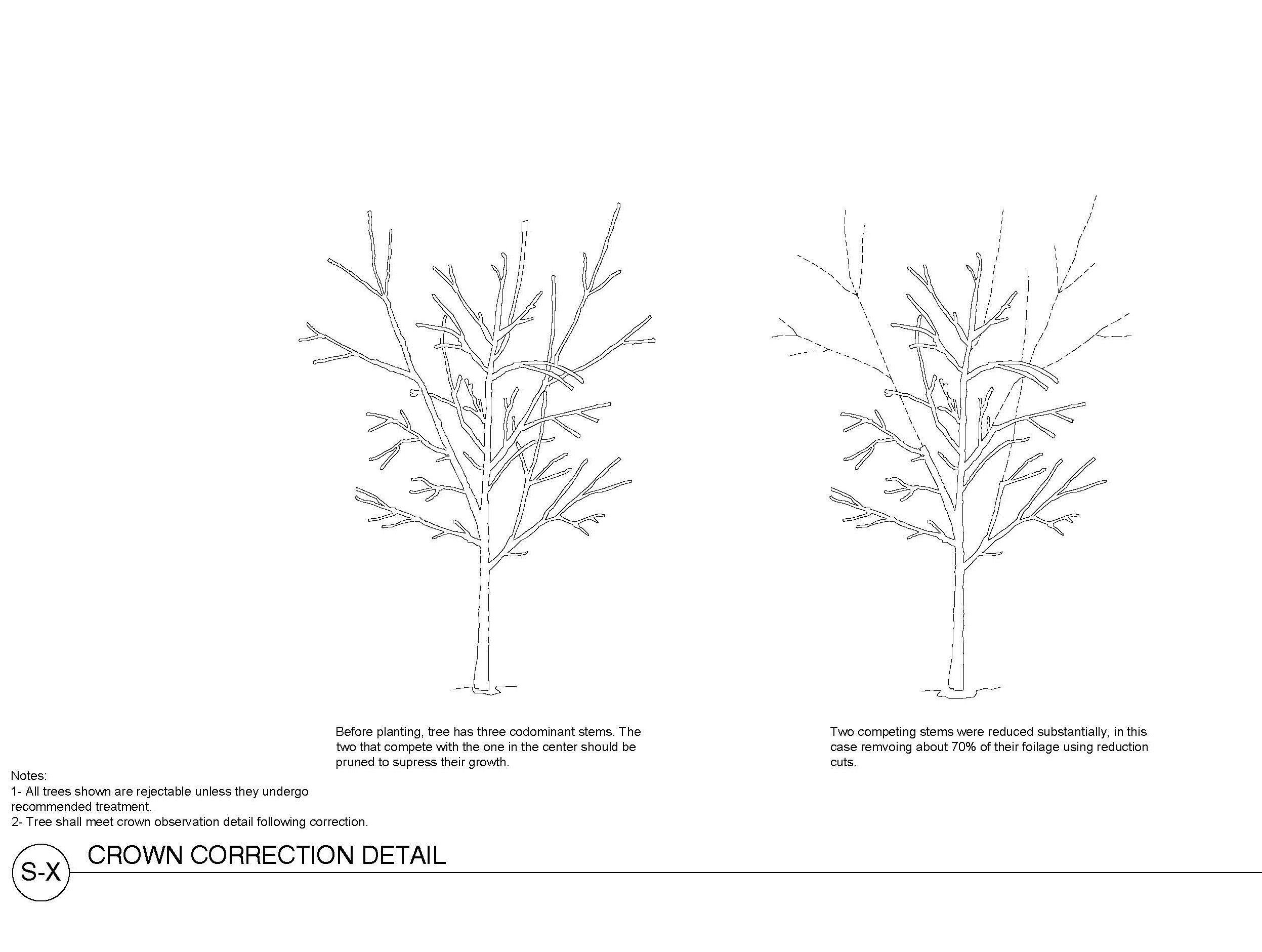
Crown Observations
-
![Technical diagram showing soil fracturing process for planting, with labeled steps, dimensions, and instructions.]()
Root Observations
-
![Technical diagram showing acceptable and rejectable crown observations for high-branching trees, with details on aspect ratios and branch measurements.]()
Crown Corrections
-
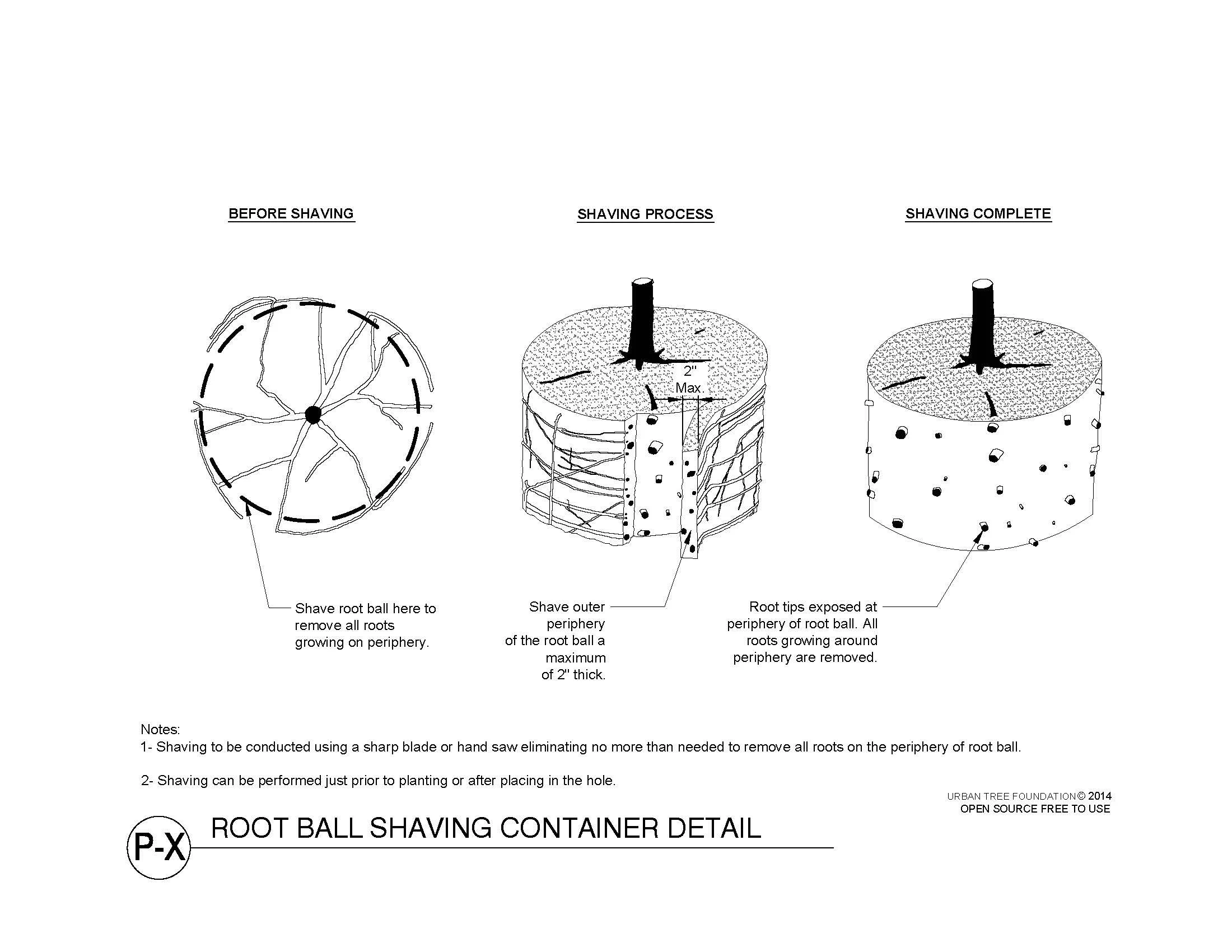
![Illustrations of a root ball before shaving, during the process with shavings removed, and after shaving with exposed roots. Instructions and notes regarding shaving techniques are provided.]()
Root Corrections
Check out these webpages for even more information
Growing plants in a nursery
Choosing a tree species
Pruning at a tree at all ages
Caring for a young tree
Planting a tree