Structural Pruning
Structurally prune every 2 to 4 years beginning at planting. The objective is to prevent all branches and stems from growing larger than about half the diameter of the trunk.
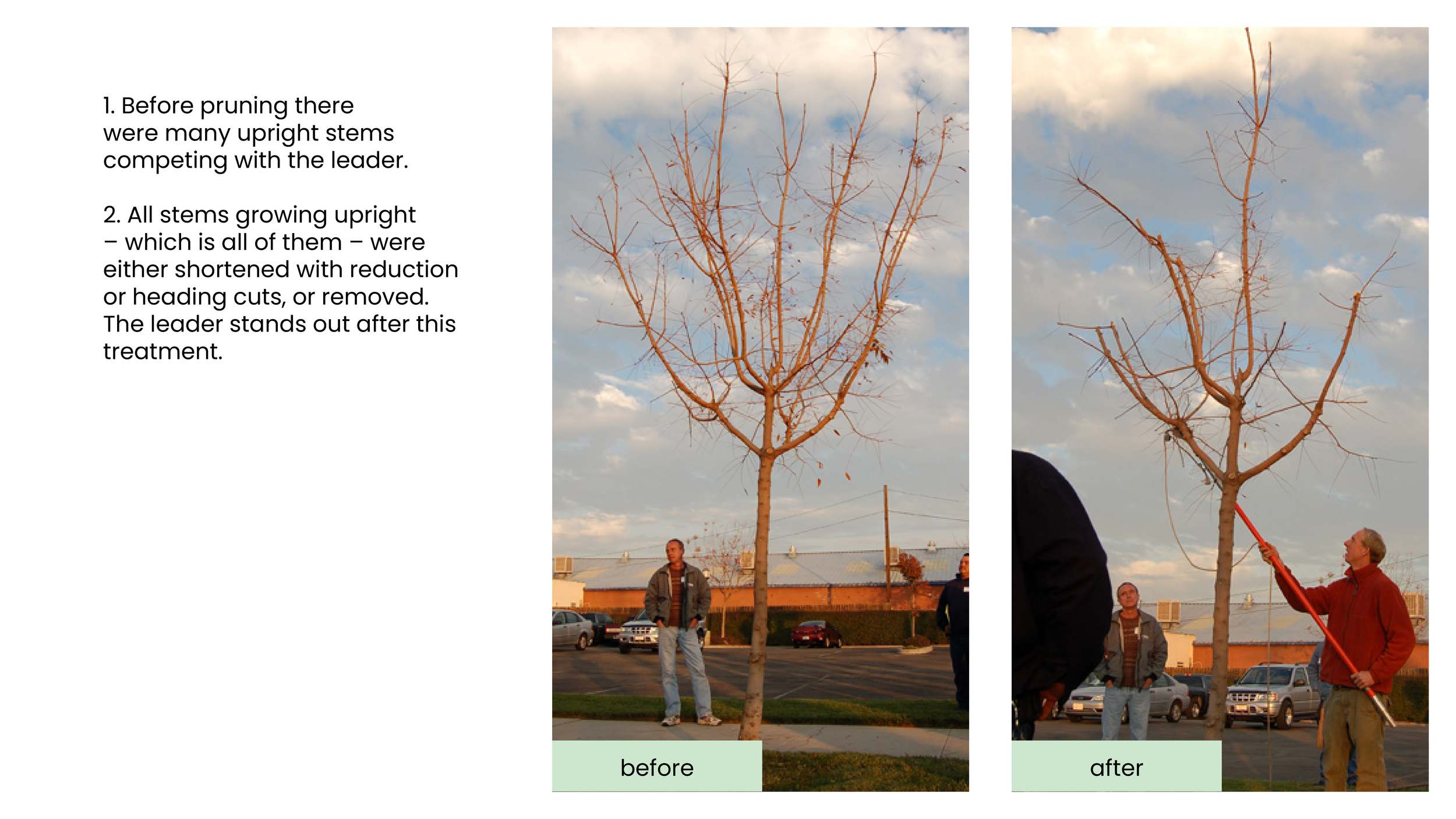
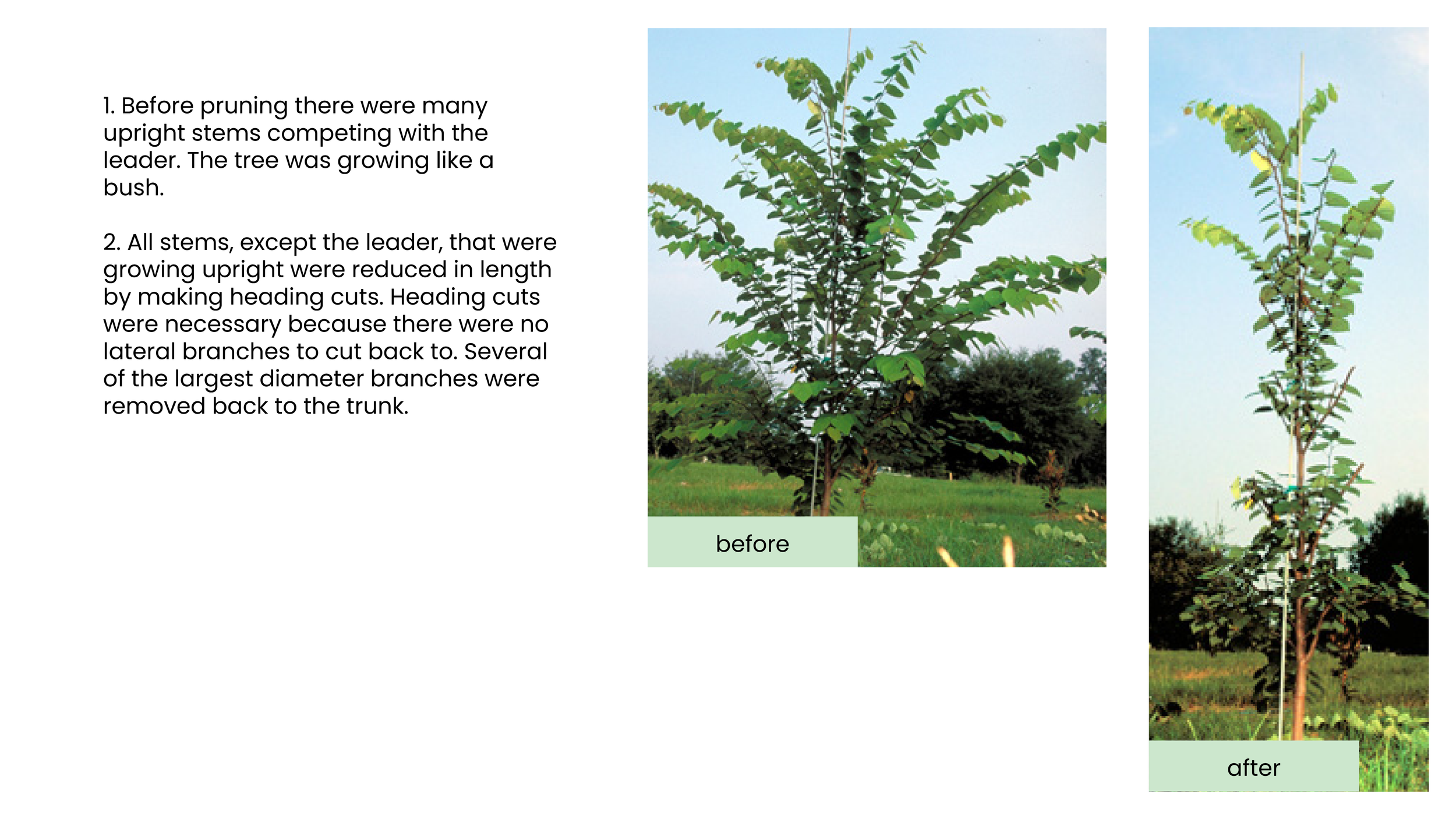
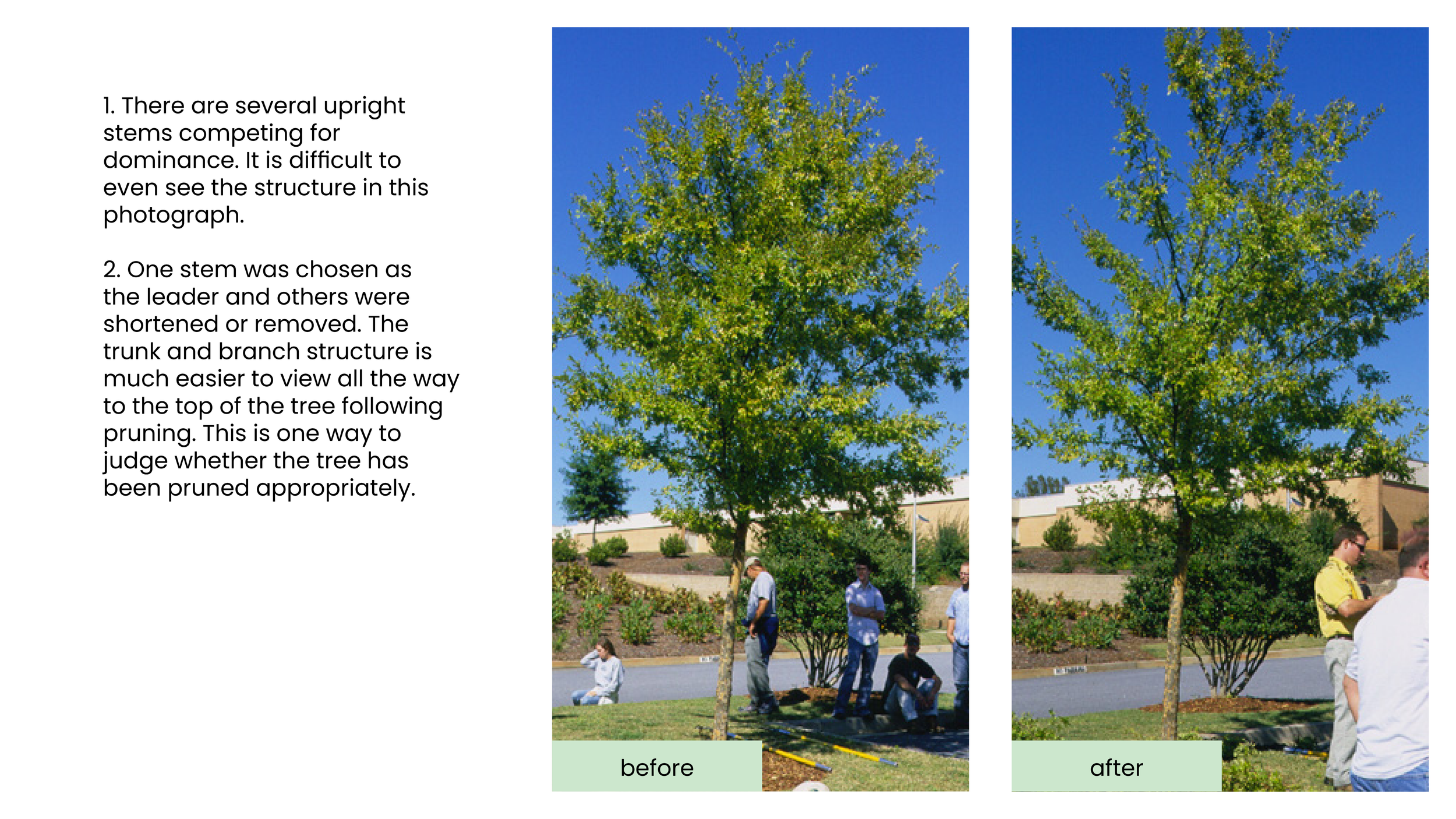
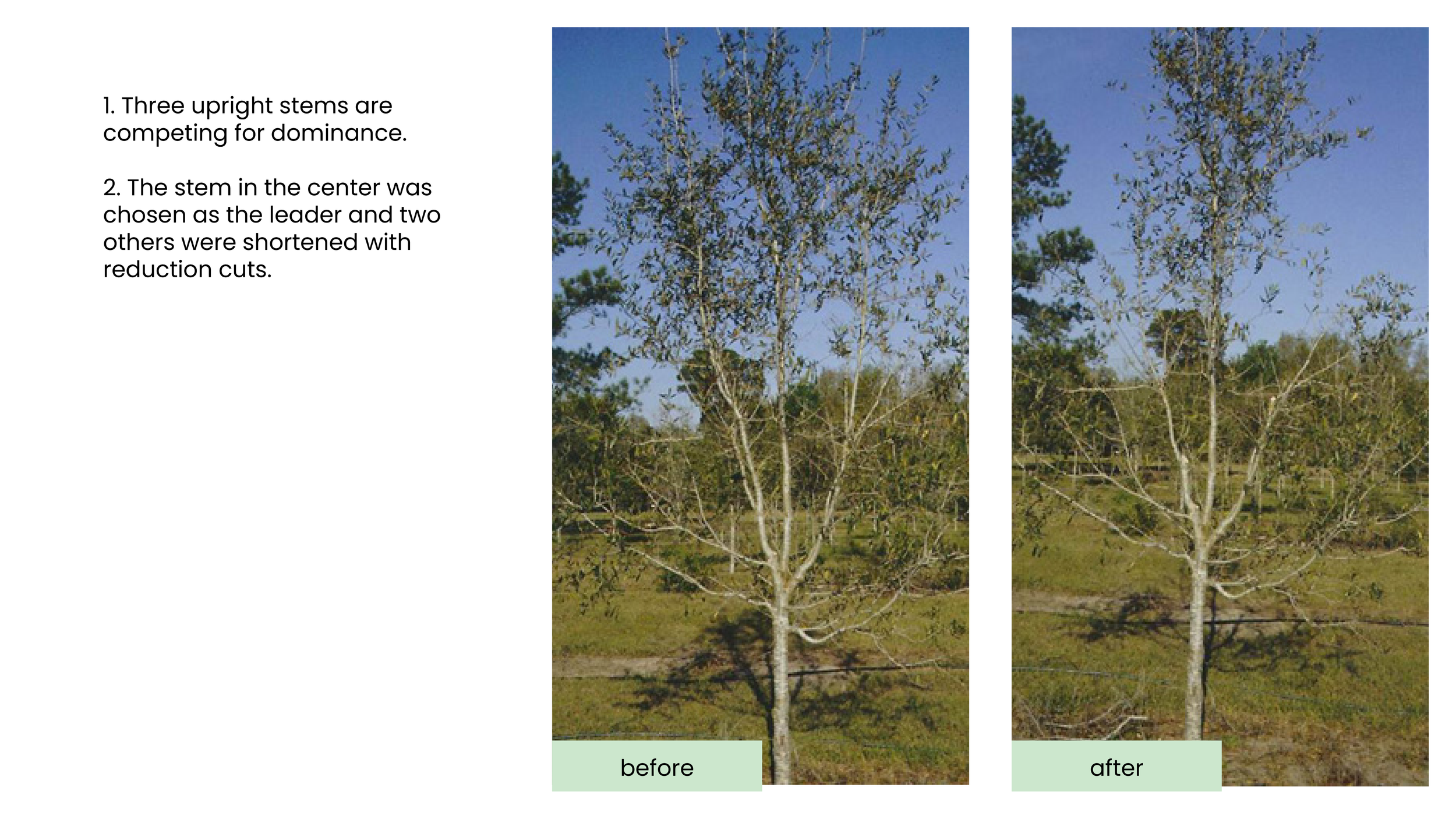
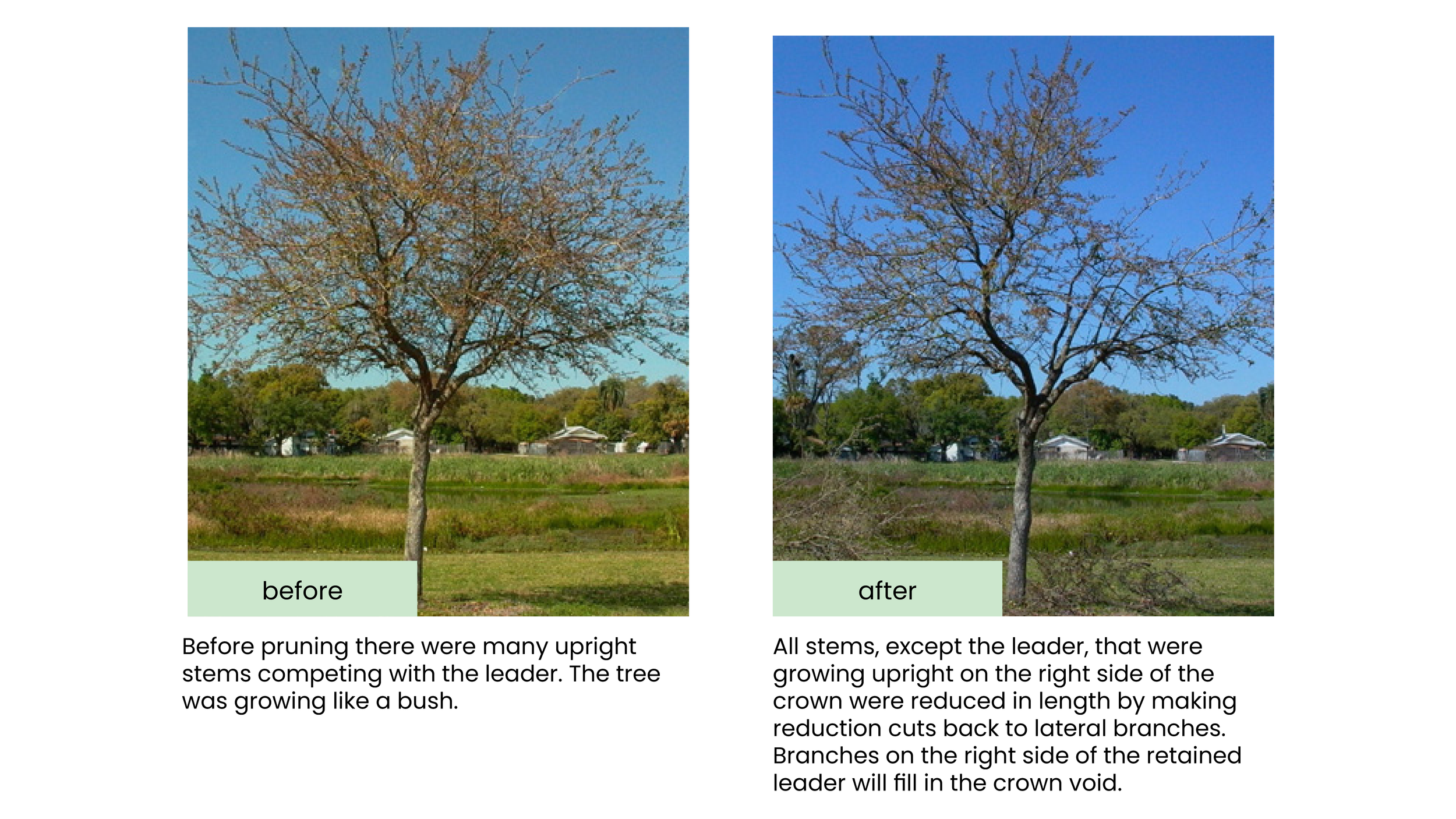
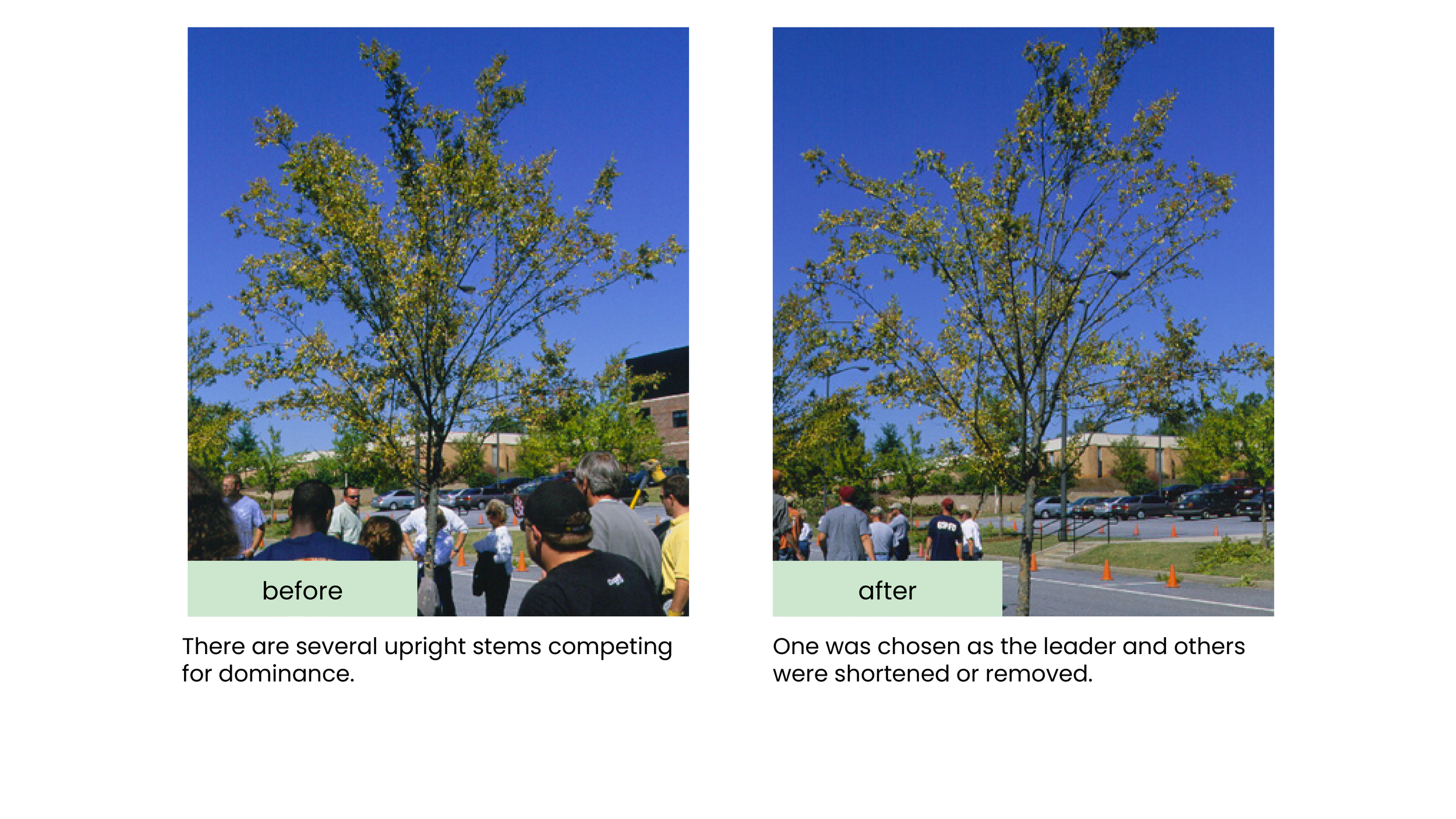
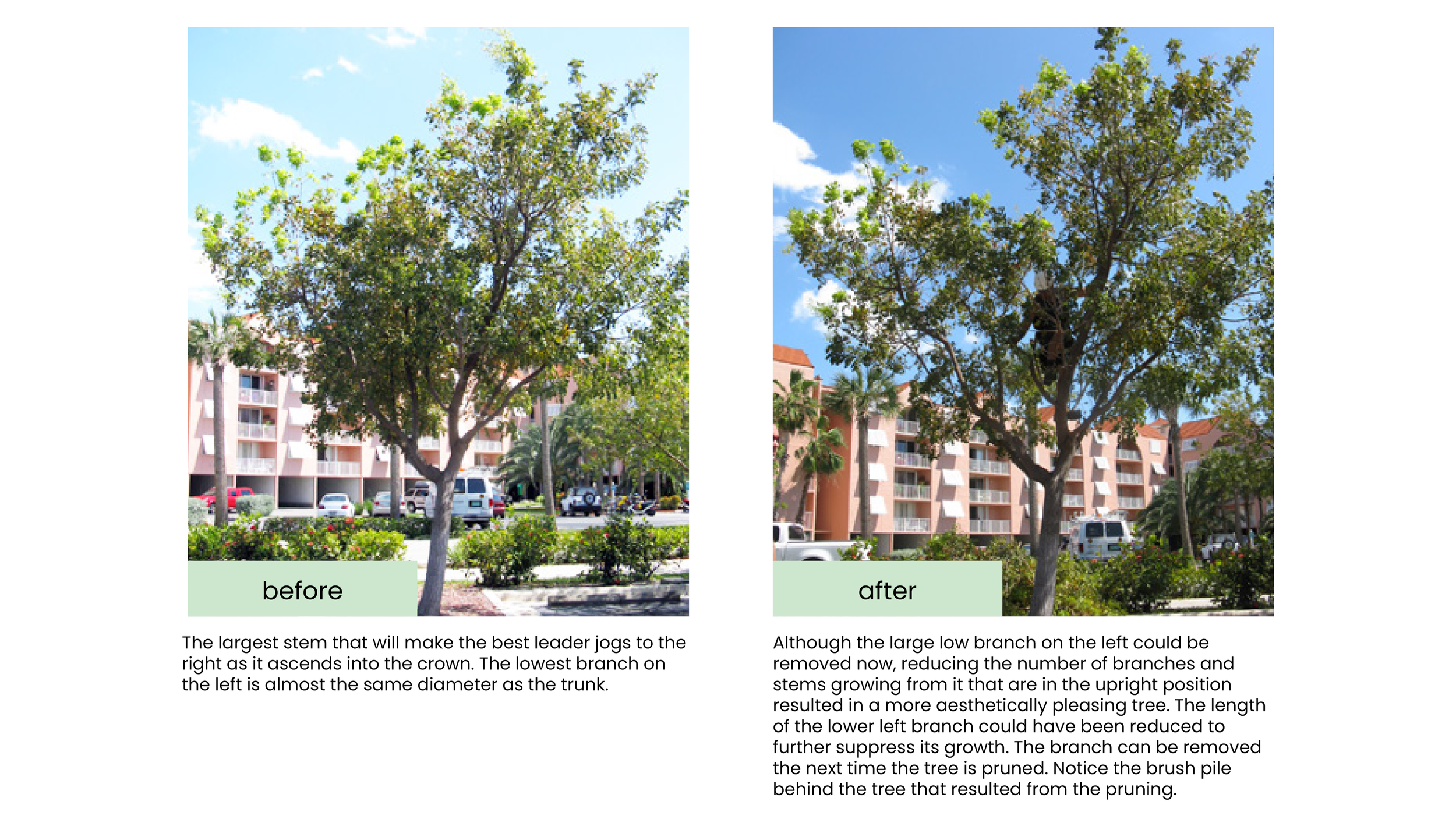
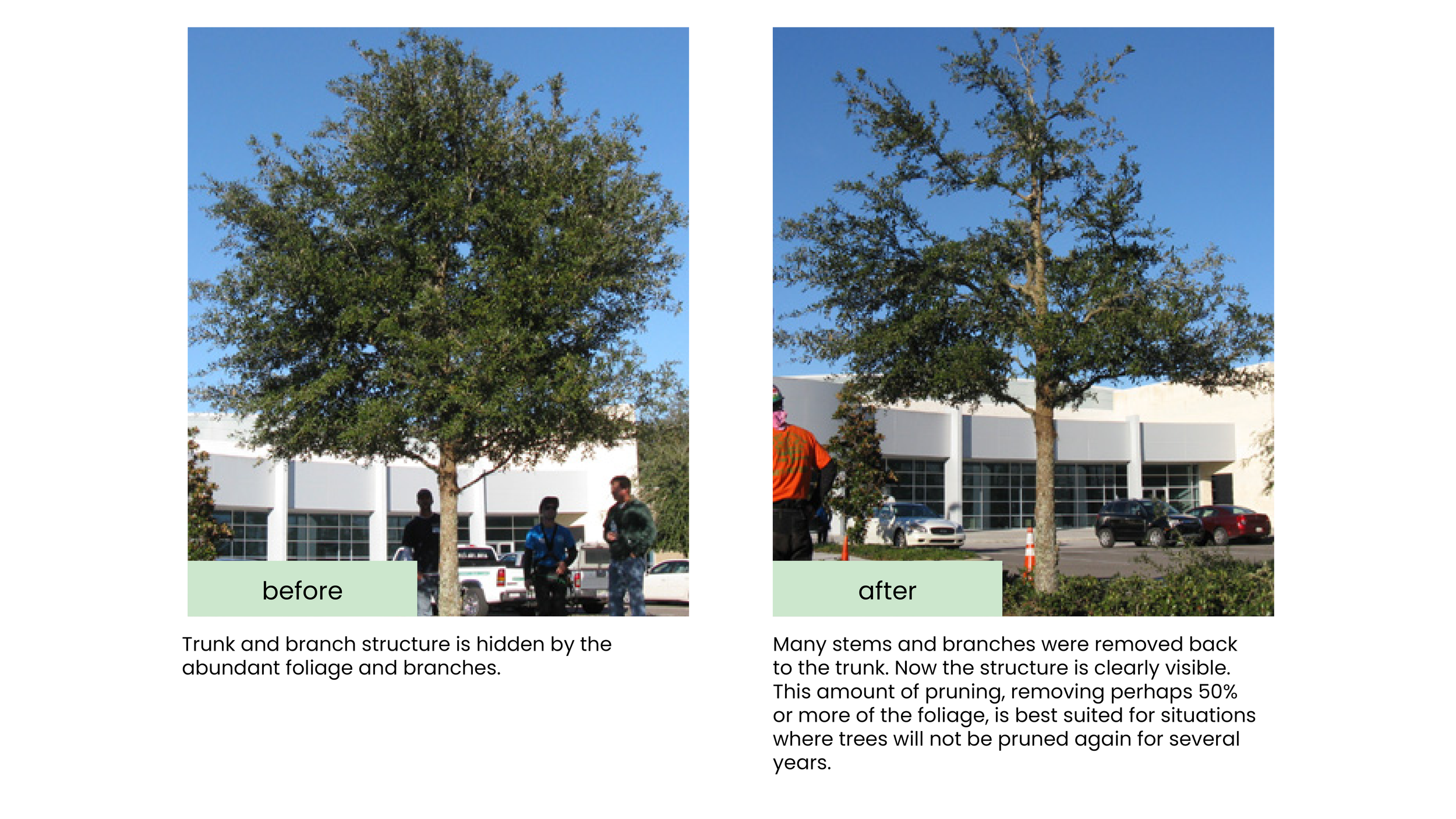
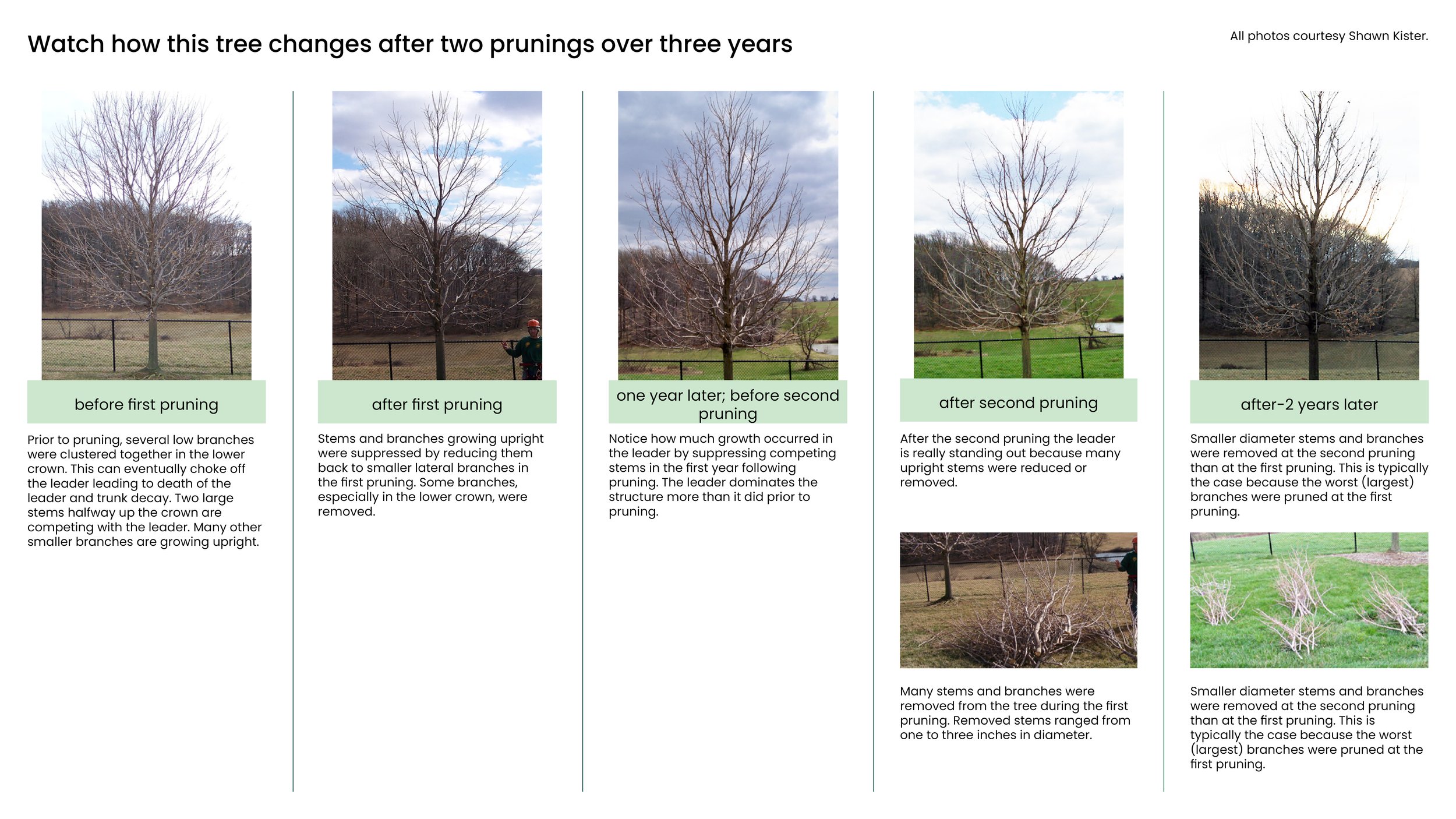
Trees with one dominant central leader resist storm damage. A dominant leader is the one stem that is larger than all others. Structural pruning on young trees guides future tree architecture by pruning to suppress branches competing with the dominant leader. This is accomplished by shortening the largest branches using reduction cuts. Removal of the largest branches (on young trees) from the lower trunk is also key to encourage more growth into the leader.
Pruned branches grow slower, forcing more growth into one dominant leader. Young trees respond quickly to structural pruning. The reduction in branch diameter relative to trunk diameter (aspect ratio) brought about by structural pruning is slower to manifest on medium-aged and mature trees than on younger trees because the core trunk and branch structure has already been established.
Goals of structural pruning:
Develop and maintain a central leader.
Identify the lowest branch in what will become the permanent crown.
Prevent branches below the permanent crown from growing larger than half the trunk diameter.
Space main branches along the central leader.
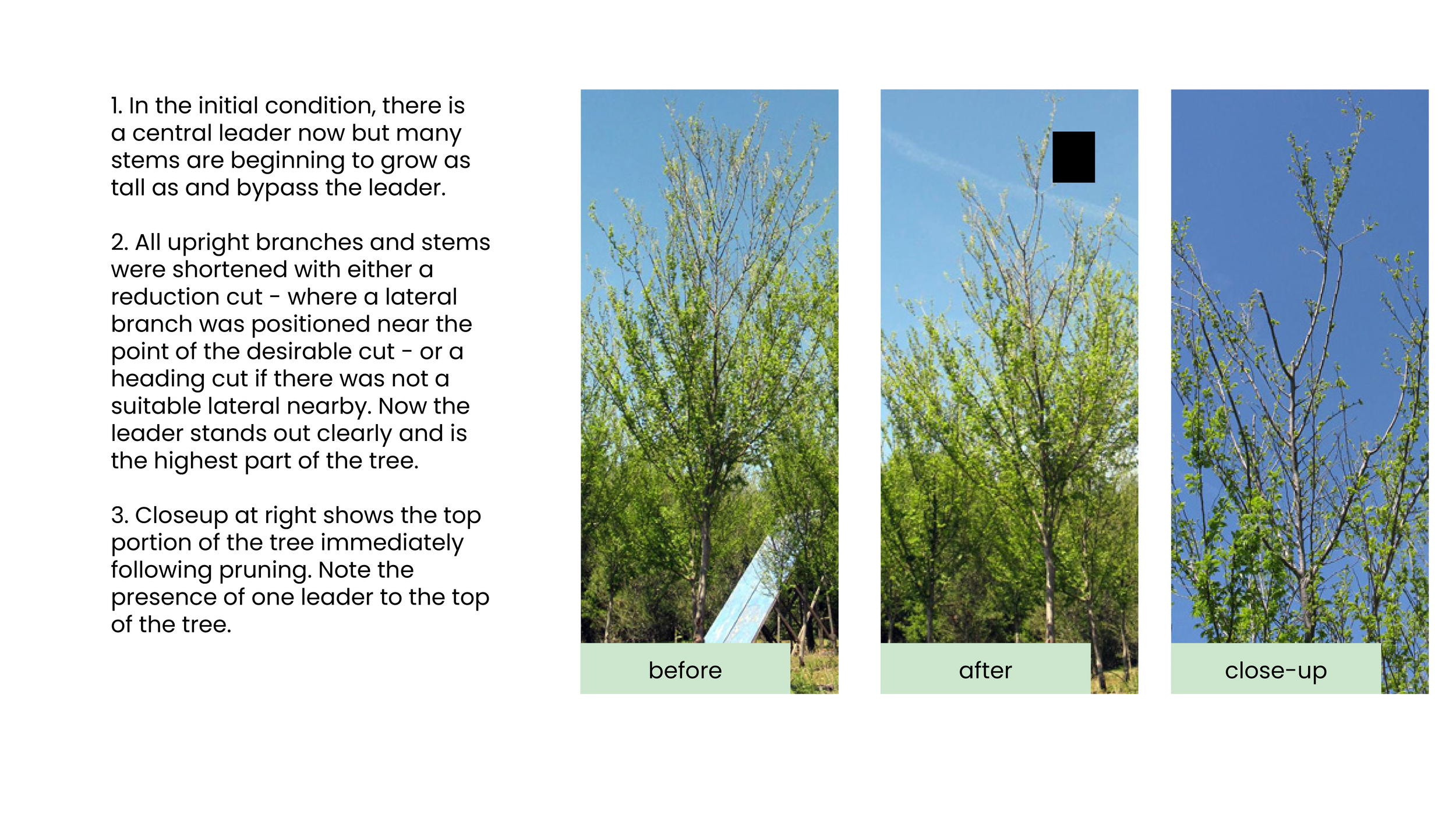
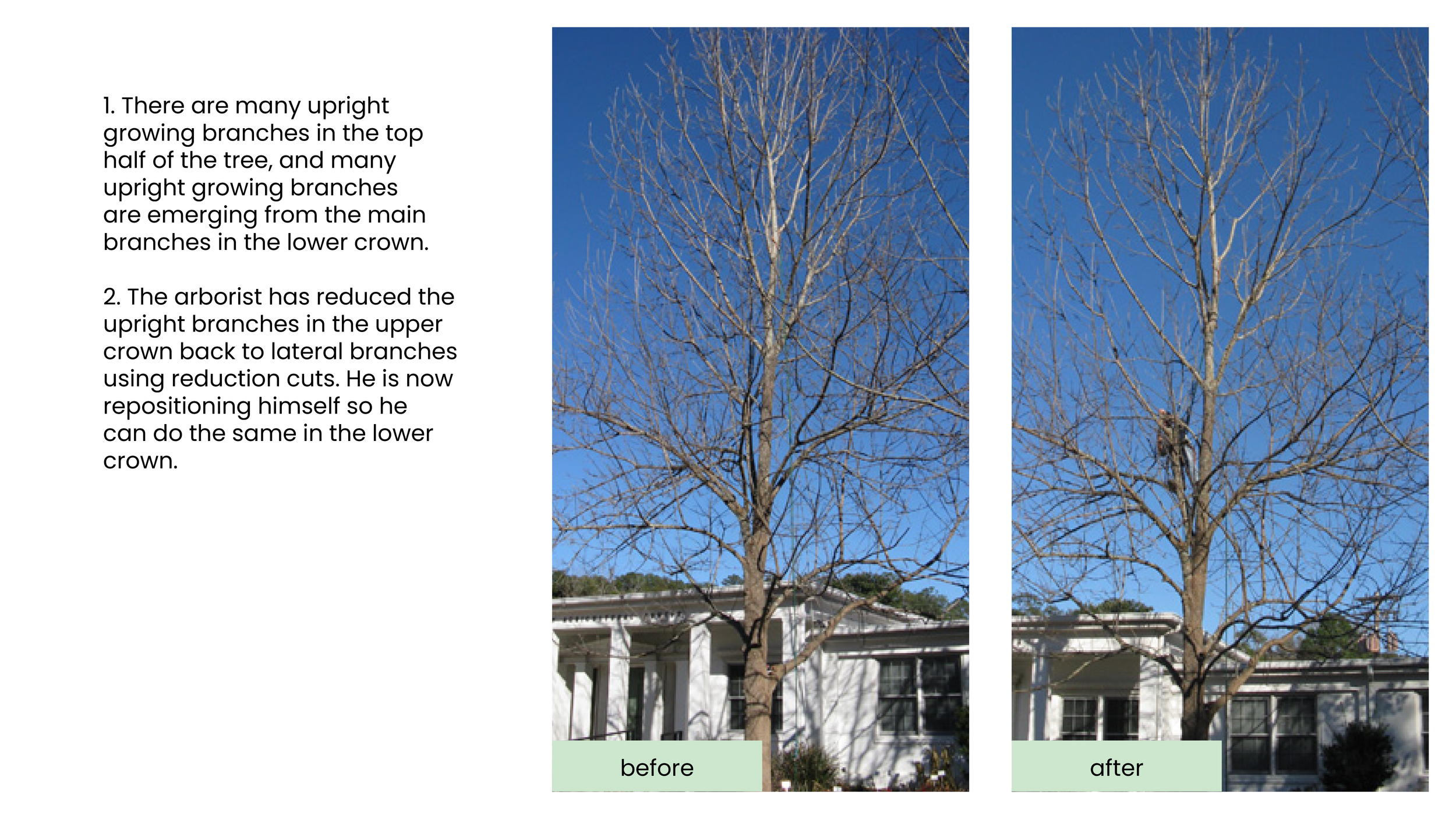
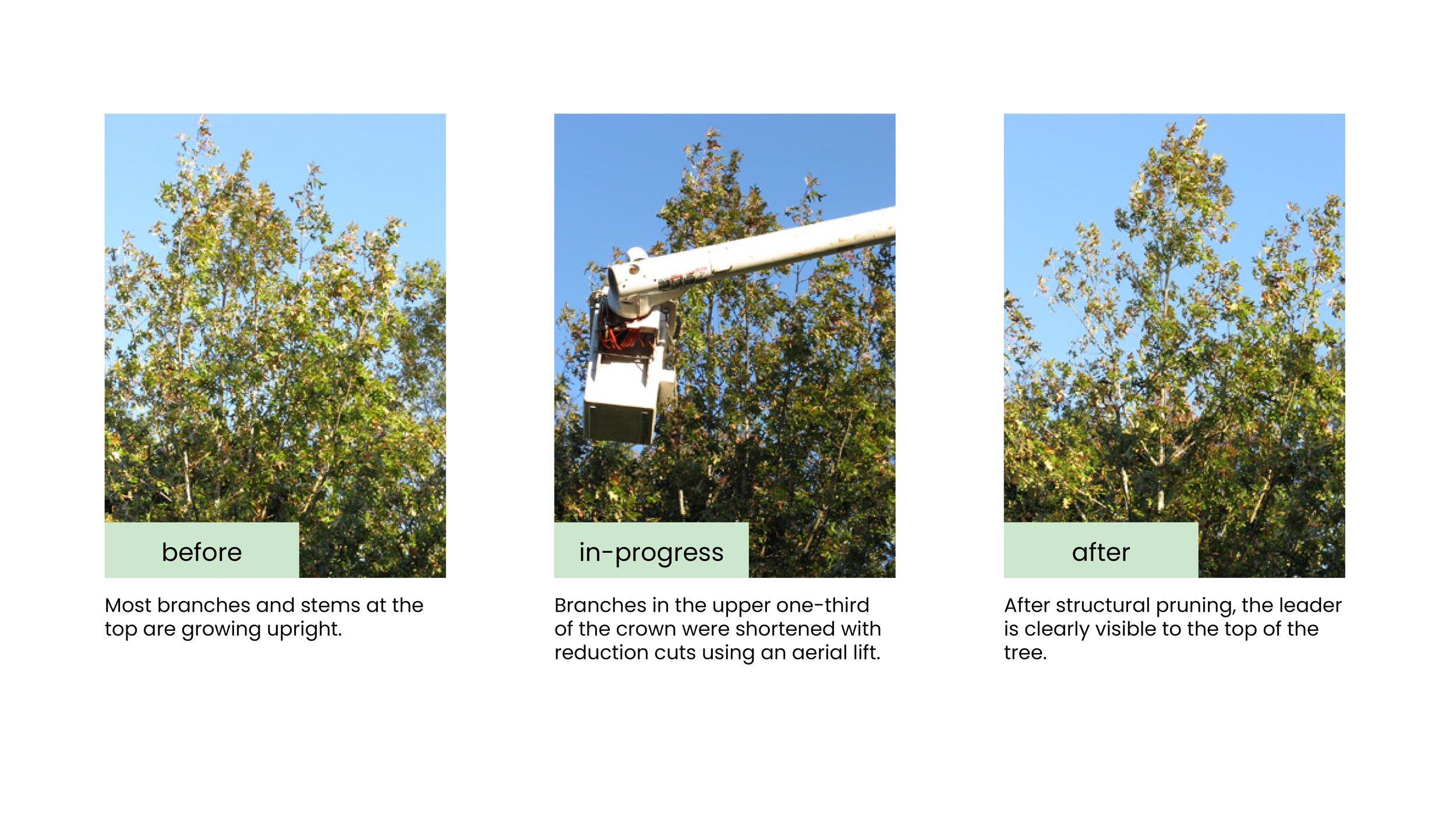
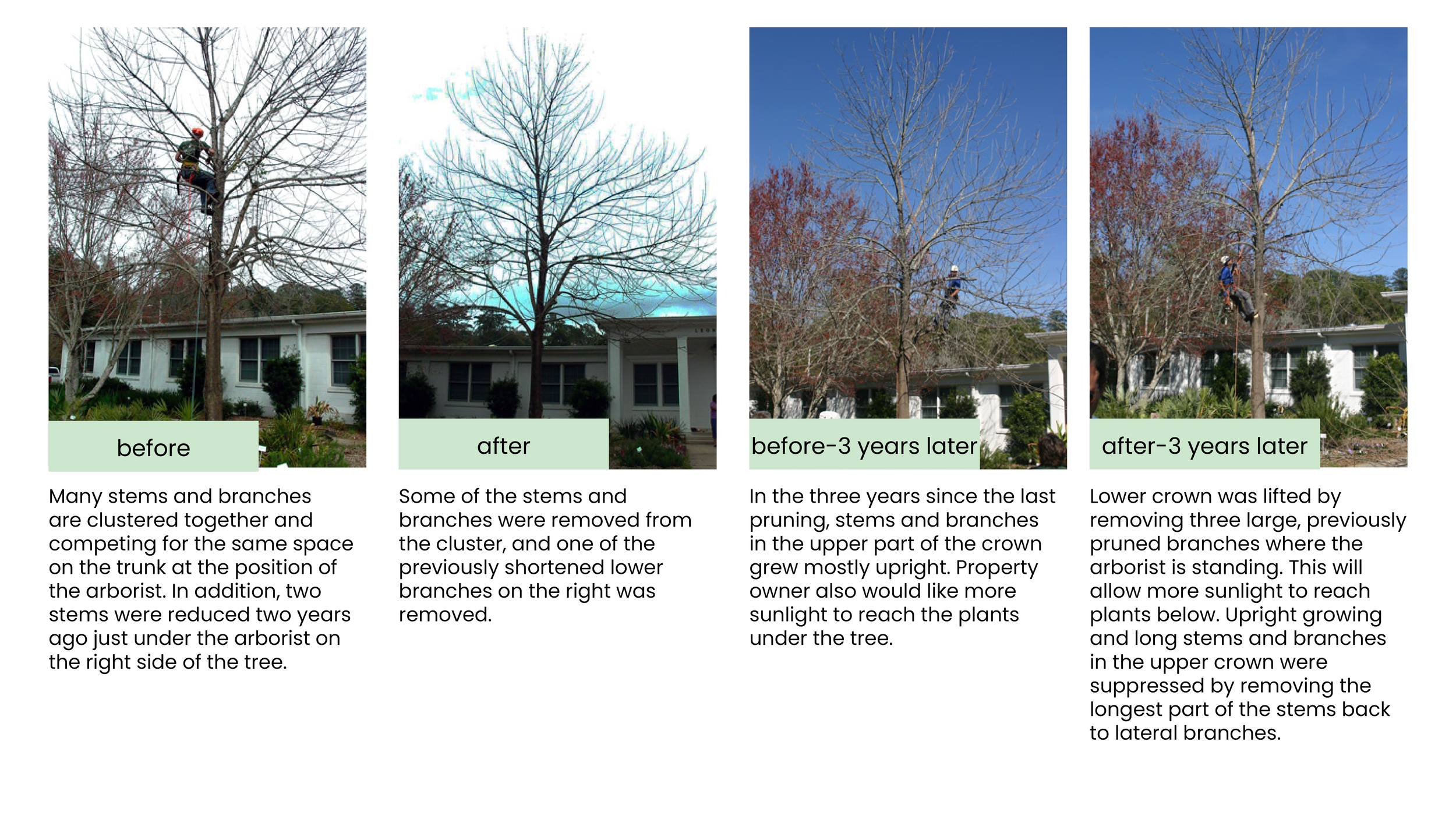
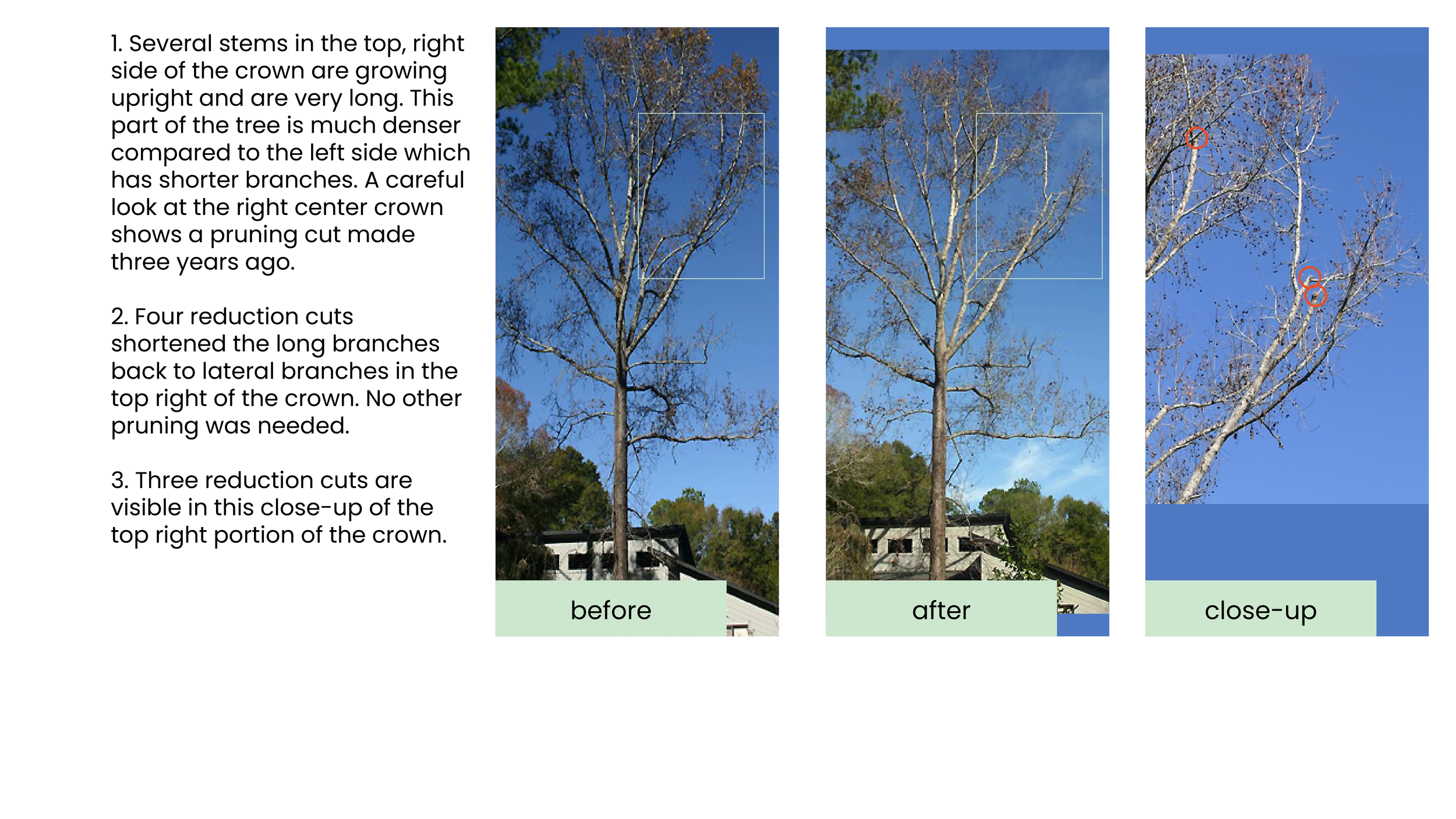
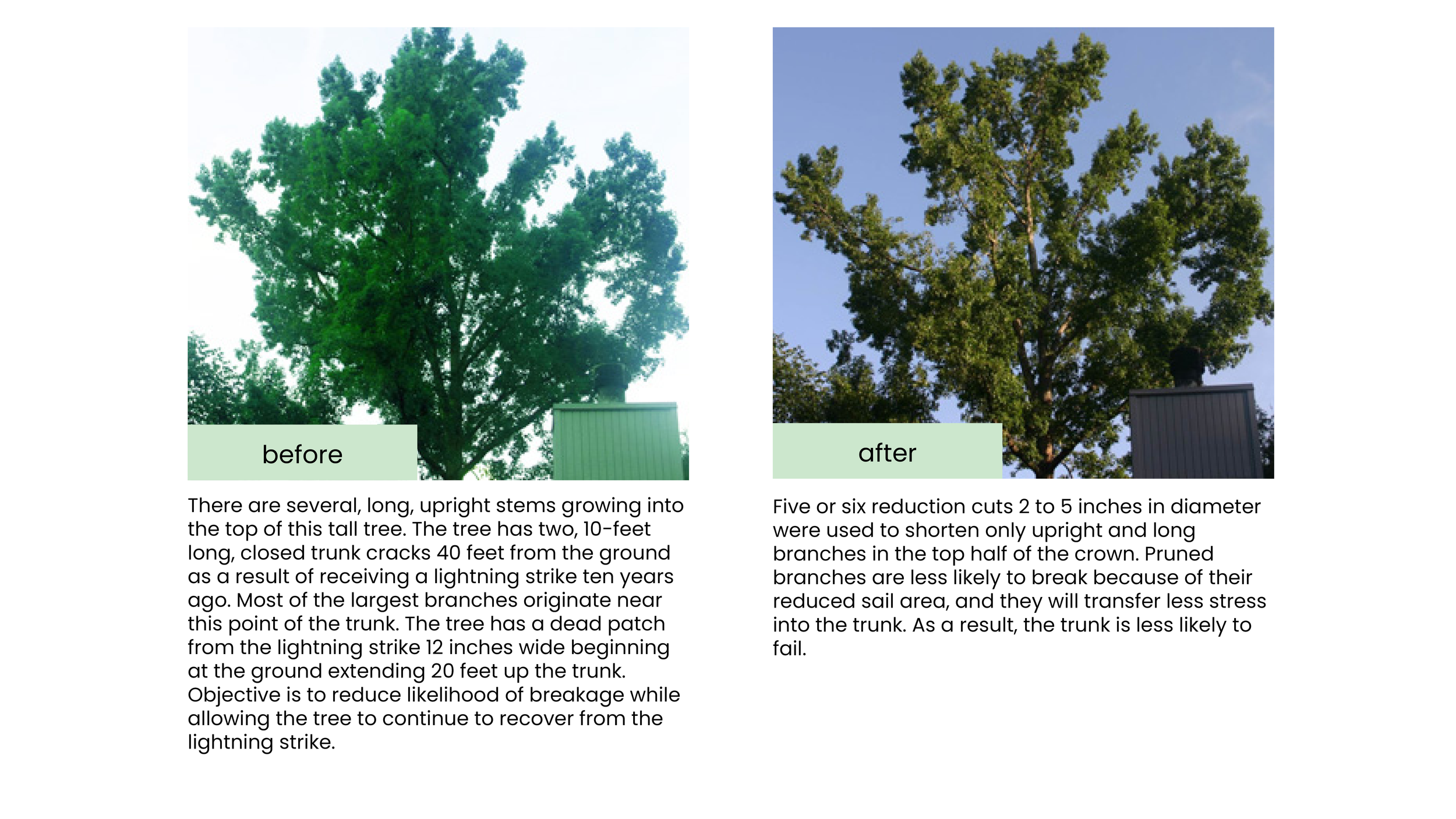
Reduce vigorous upright stems back to lateral branches.
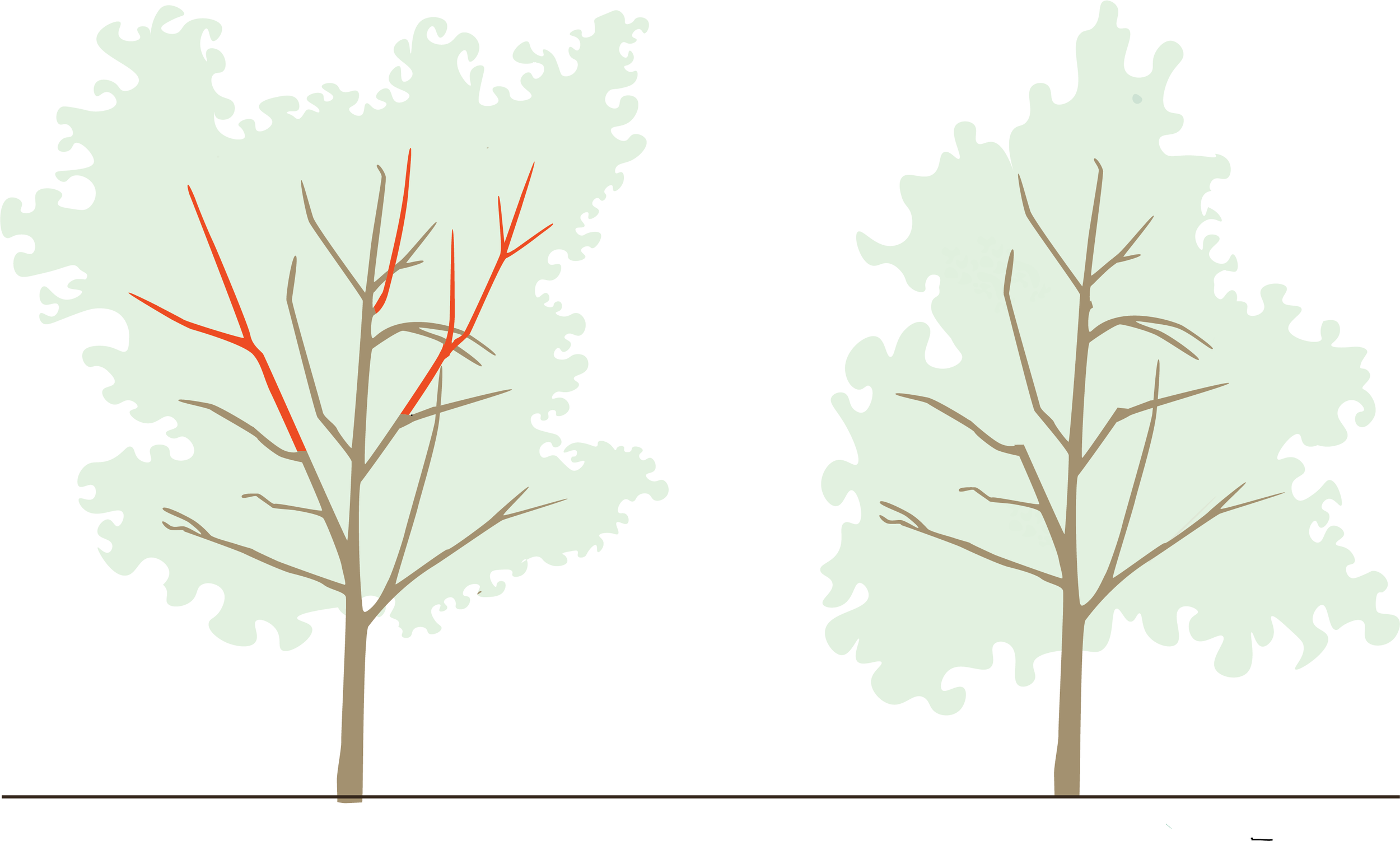
Reduce the length of or remove competing leaders to establish one central leader
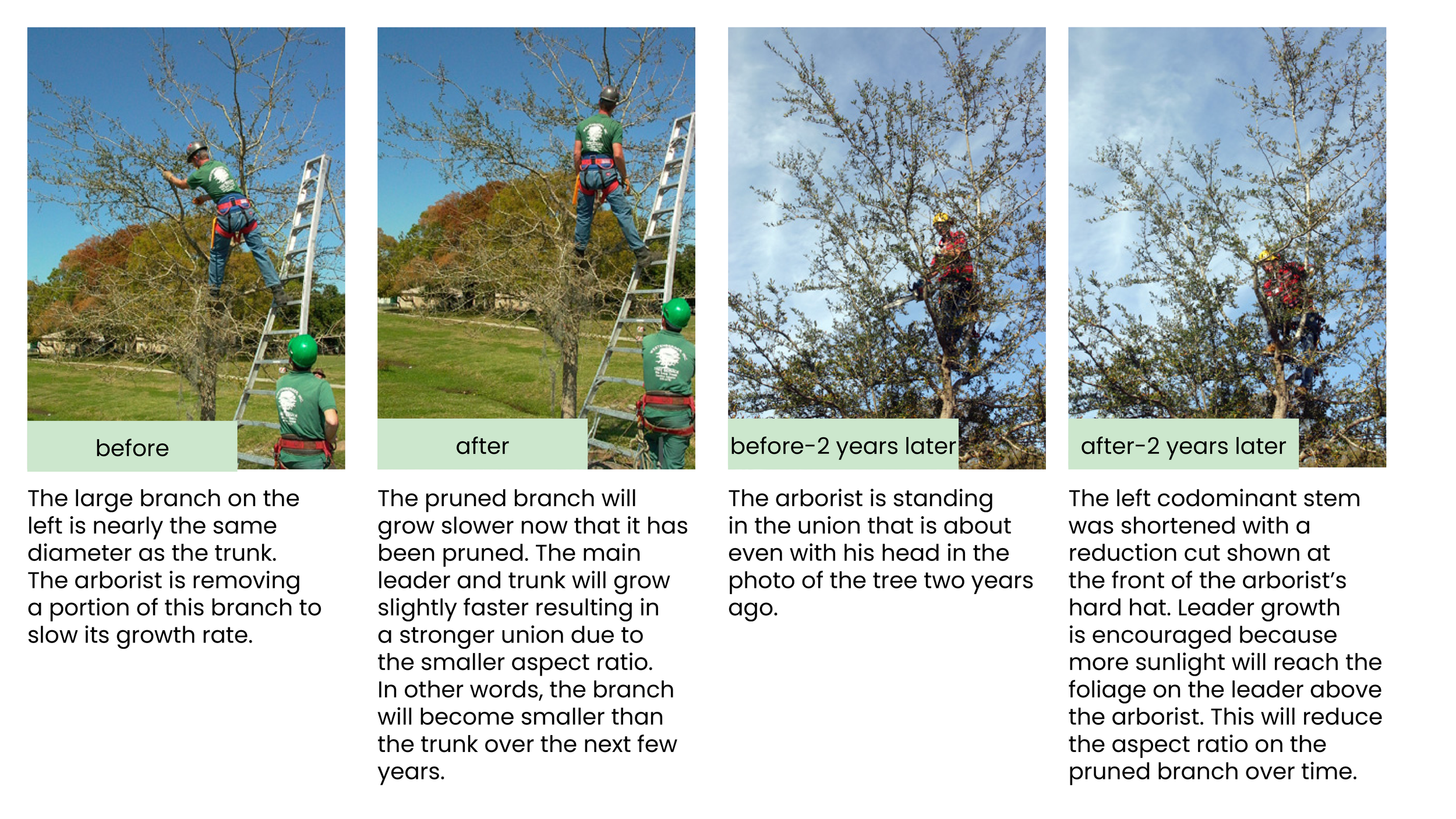
Current tree form demonstrates multiple co-dominant leaders
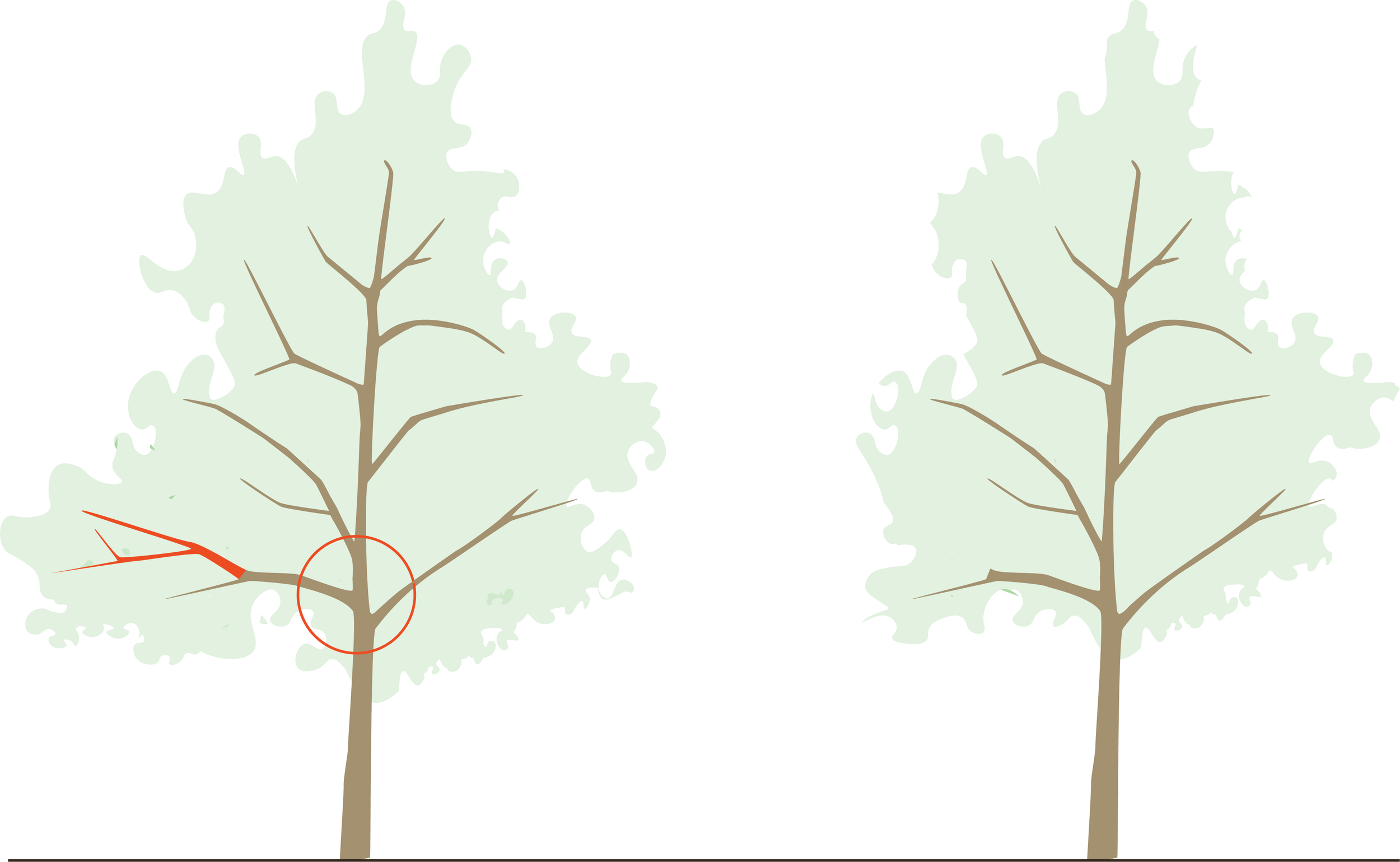
Reducing the large lower branch limits its future growth. This ensures that it remains small leaving a small wound when its removed later
Current tree form shows a large, long branch that is suppressing growth in the leader and is likely to be in the way latter
Step-by-step:
Identify the best candidate for a dominant leader. It should be in the center of the crown, and free of cracks, openings, mechanical damage, large pruning wounds, cankers or other defects that could compromise its strength.
Identify the stems and branches that are competing with this stem. This includes stems larger than half the diameter of the leader, and large vertical growth other than the central leader.
Reduce the length of or remove:
competing stems and branches back to the trunk,
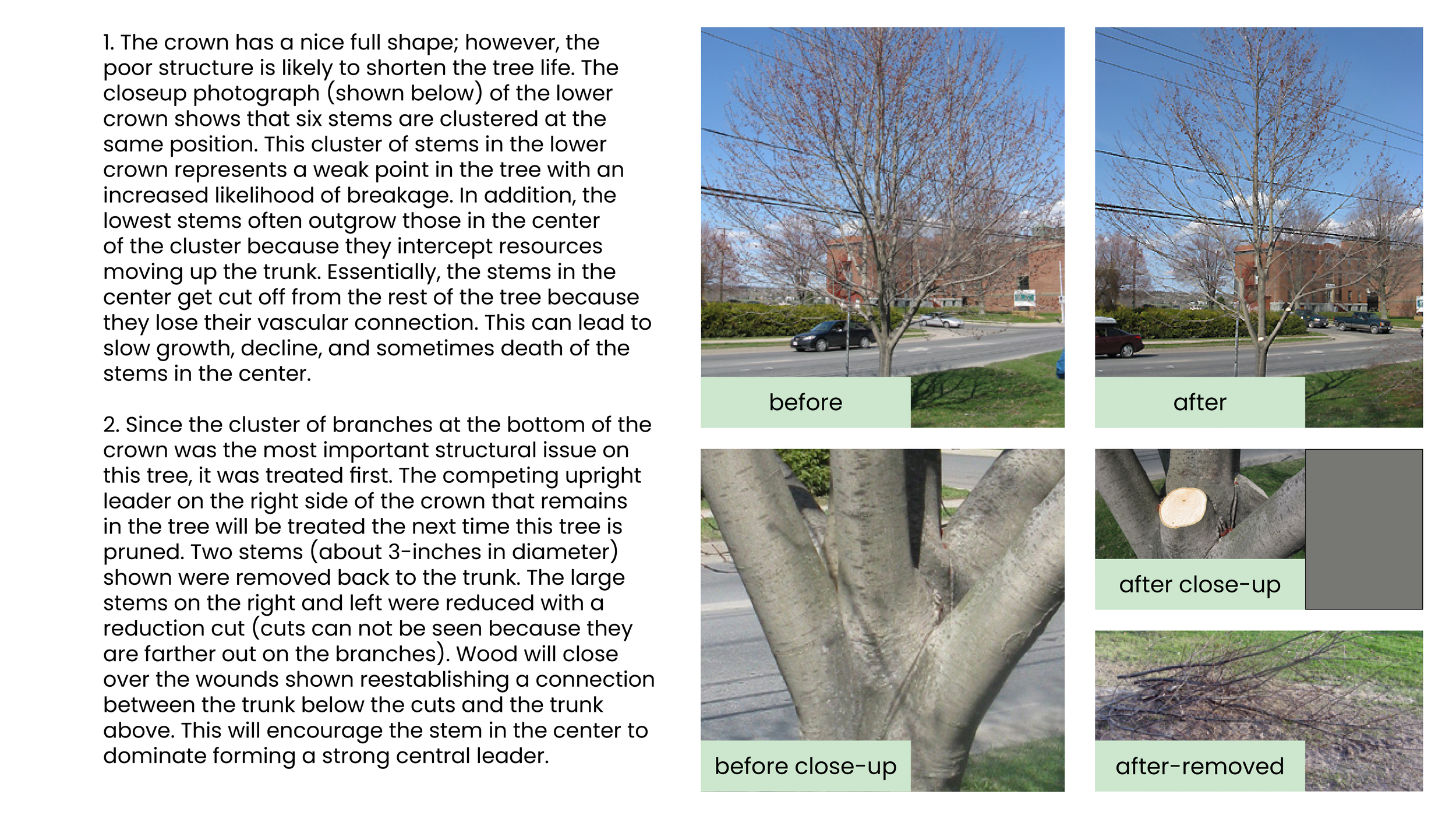
branches that are clustered together and growing from the same point on the trunk. Ideally, only one - large branch grows from any one position on the trunk.
branches with inclusions or other weak attachments
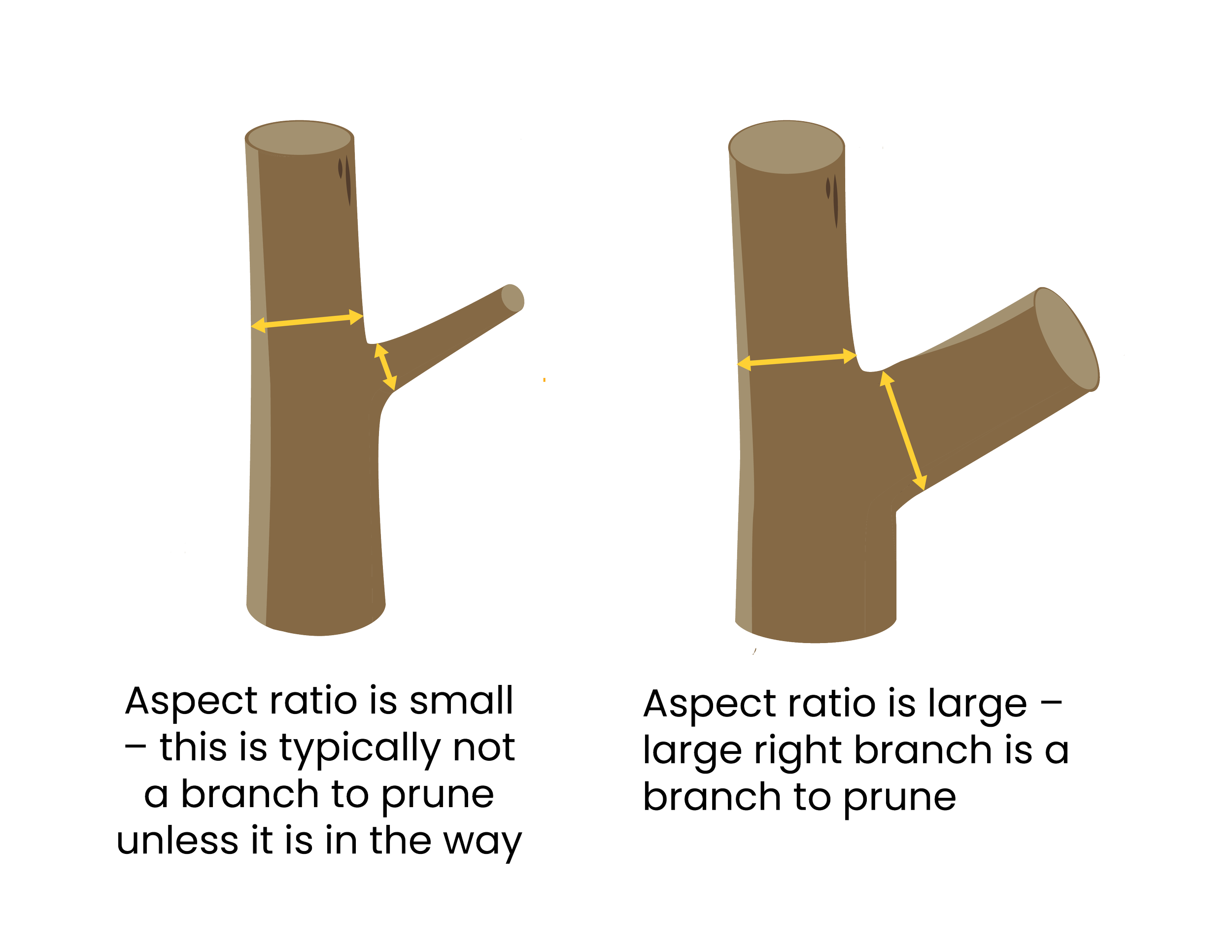
Consider Aspect Ratio:
The size of a branch relative to the trunk or parent branch, known as the branch aspect ratio, is extremely important because of its effect on how the branch and trunk are held together. Branch aspect ratio is determined by calculating the ratio of the diameter of the branch to the diameter of the trunk. For example, where a 3-inch branch is growing from a 6-inch trunk, the aspect ratio is 1:2 (3 ÷ 6 = 0.5, or 50%).
Branches with a small aspect ratio (e.g., 30%) are more strongly secured to the trunk than are those with a large ratio (e.g., 70%) because the trunk and branch wood overlap with each annual growth increment (ring). When trees are young and adolescent, branch aspect ratio is a prime indicator of where future growth will occur; that is, on branches with the largest ratio. When branches are much smaller in diameter than the trunk (e.g., 30%) a natural protective region (called a branch protection zone) develops within the branch base that extends inside the trunk. This unique zone of cells resists the passage of decay organisms into the trunk when the branch dies or is removed. The branch protection zone does not develop on branches with a large aspect ratio (e.g., 70%).
Pro Tip: Pruning a young tree
Be prepared to develop good structure after planting if there are few nurseries that carry a particular species with suitable trunk and branch structure. This can begin when the tree is planted. When you see that pruning is needed to correct some trunk or branch defects on a recently planted tree, and you will not be able to prune the tree for several years, prune it at planting to correct the problem. If you wait, it may never be pruned correctly. Long-term health will be enhanced with improved structure.
Even small diameter (pencil size) stems that are the same size as the leader can occur in the top half of the crown on high-quality nursery stock. These could eventually develop into a group of co-dominant stems if they are not pruned at planting. Some pruning at planting is almost always necessary because it is unreasonable to ask growers to prune every tree with one perfect single leader to the very top of the crown. Last but not least, always check roots at planting and prune to correct circling roots and other root defects that could impact future health.
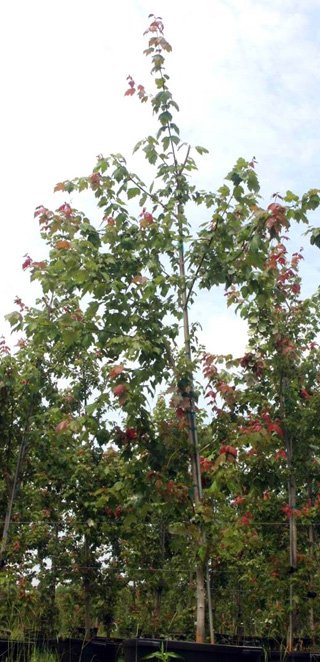
Tree on the left was planted into the ground from a 45-gallon container. Notice the small current-year stems at the very top of the tree. Right photo shows the same tree five years later with obvious codominant stems growing from what was the top of the original nursery tree. One pruning cut at planting to remove one of the two stems could have prevented the codominant stem five years later.
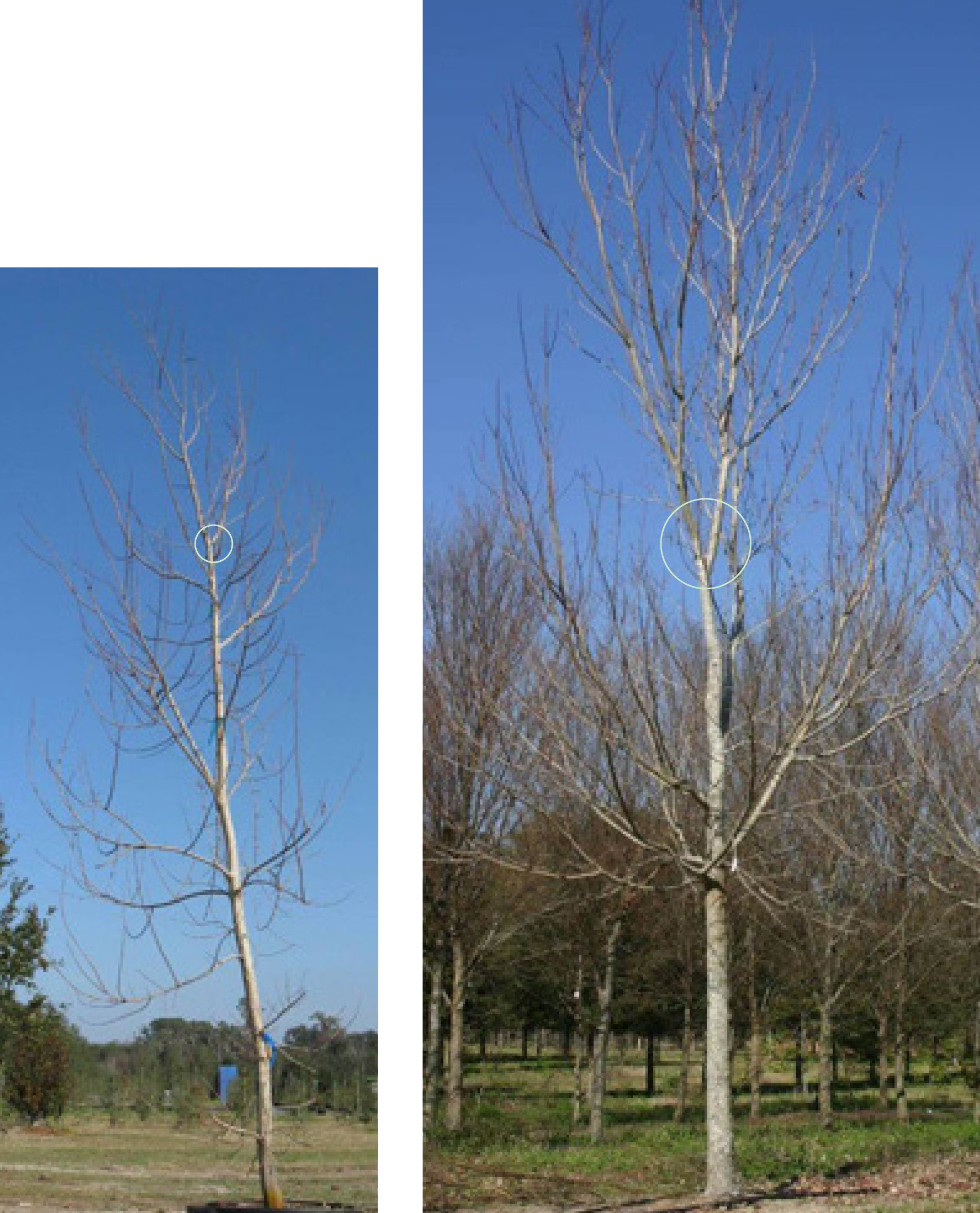
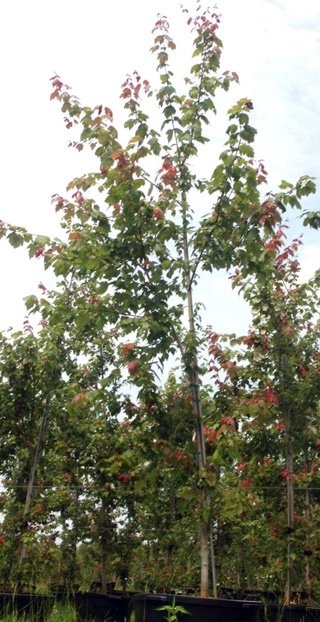
Before pruning at planting
After pruning at planting
Small stems developed into co-dominant branches on unpruned tree
Small current stems on recently planted tree
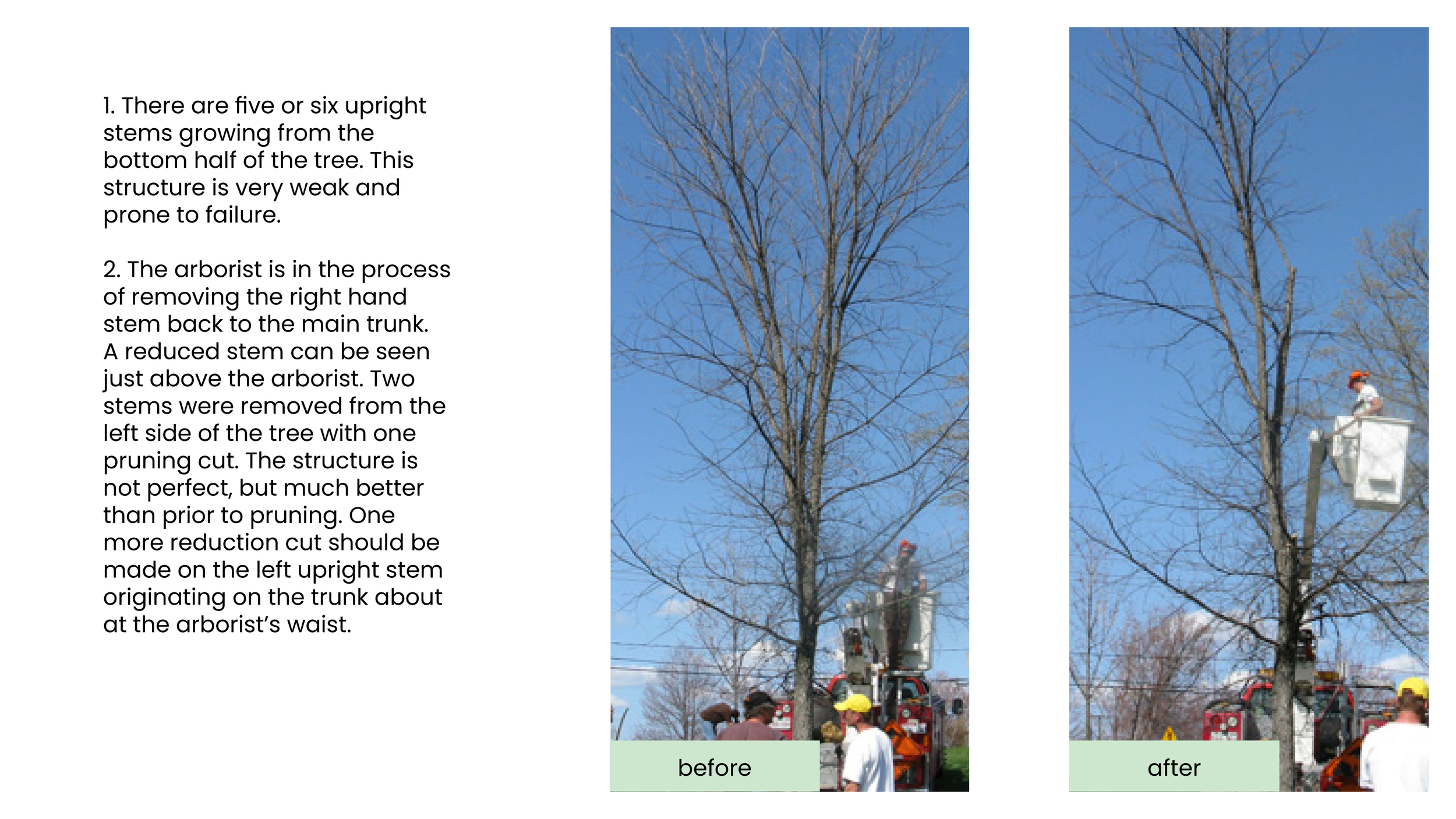
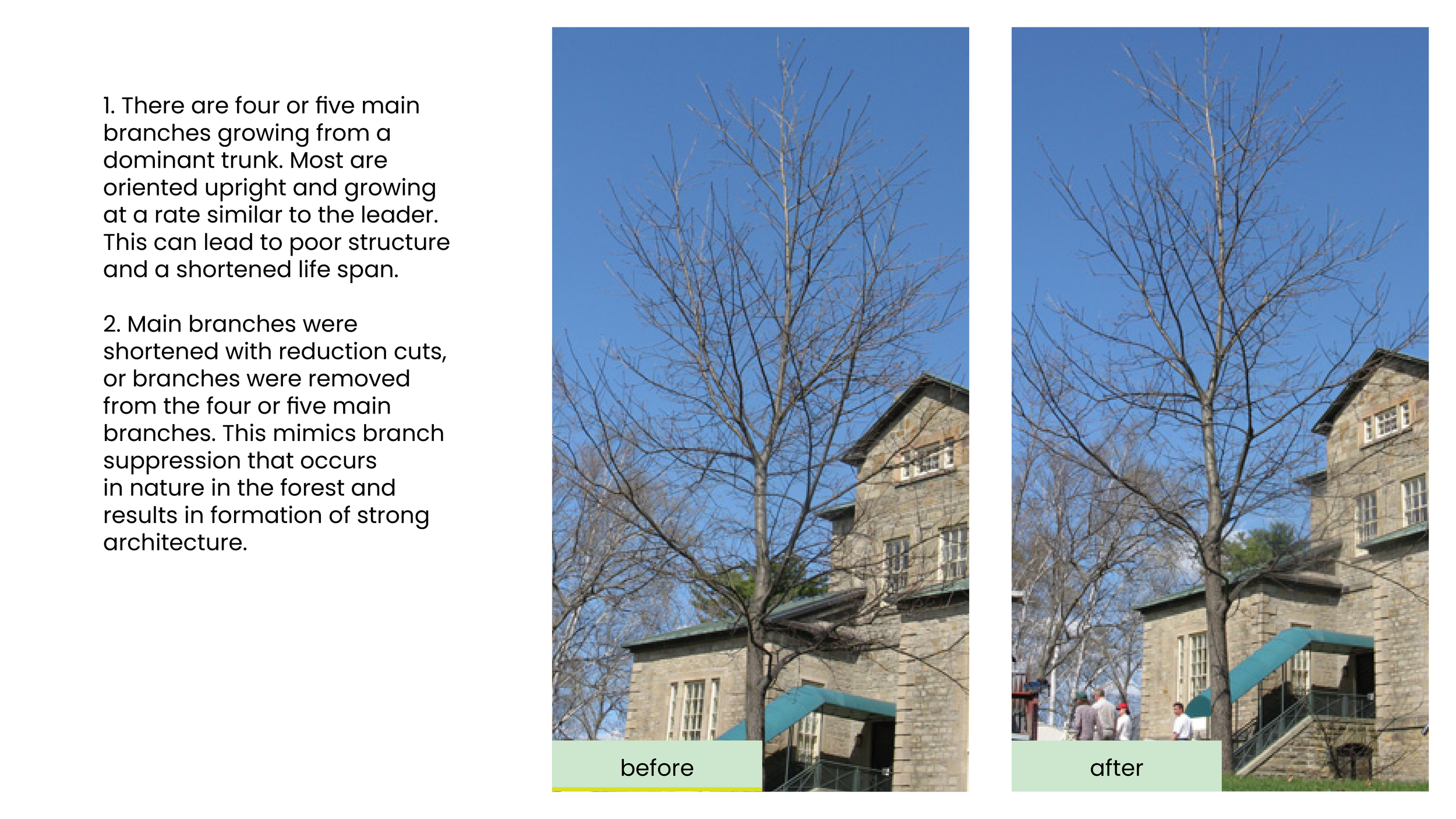
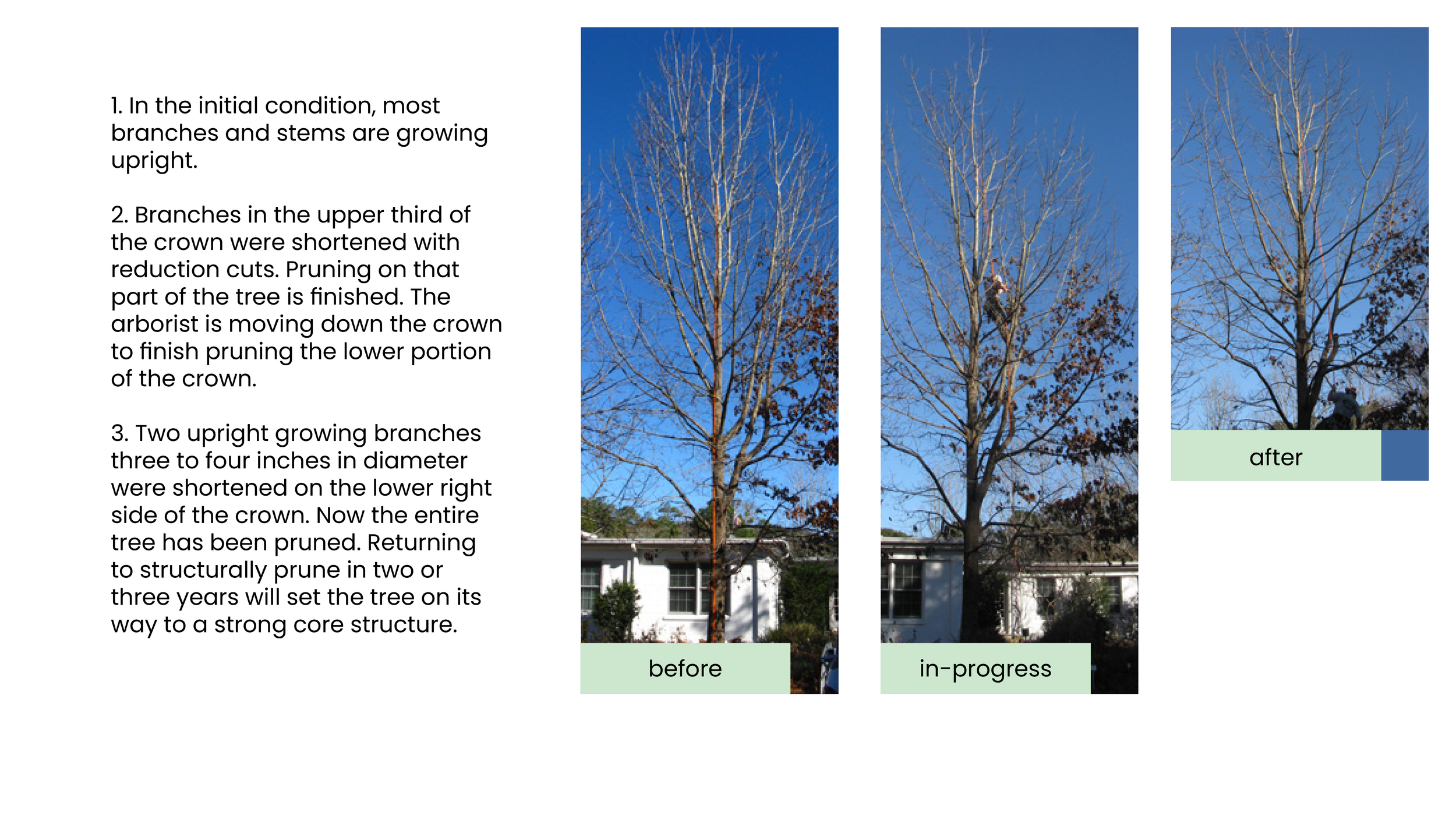
Structural Pruning Case Studies