Planning and Tree Selection
A well-chosen tree provides decades of shade, beauty, and environmental benefits while minimizing future maintenance and infrastructure conflicts. The best results come from matching each species to the conditions of the planting site. Consider mature size, growth rate, longevity, drought tolerance, soil conditions and rooting space, wind and sun exposure, salinity tolerance, and nearby infrastructure. Species diversity and climate resilience should also guide every planting decision to ensure a healthy, adaptable urban forest for generations to come.
Choose the right tree for the right place
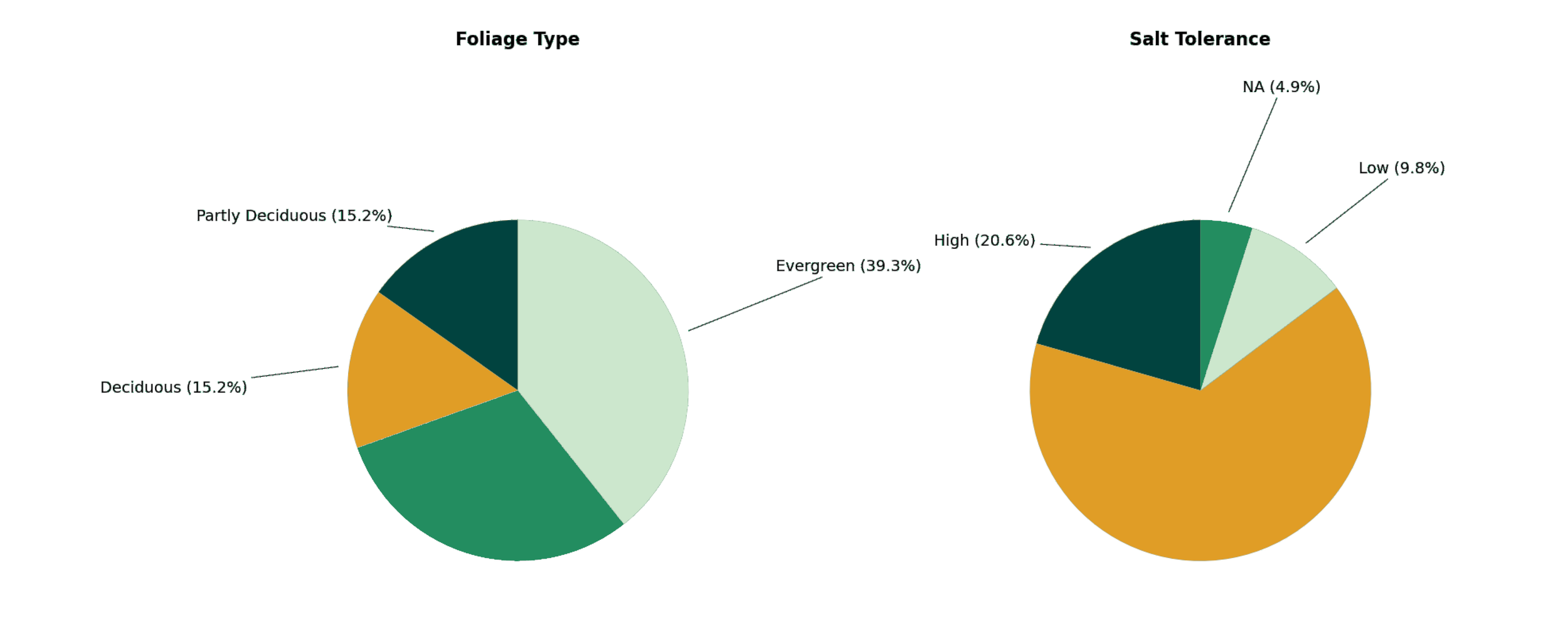
City Assessments:
City assessments allow California cities to view foundational data about their urban forest, such as trees per capita, canopy cover and species makeup. This data is essential for planning and carrying out urban forest improvement and obtaining them is usually cost prohibitive for many cities.
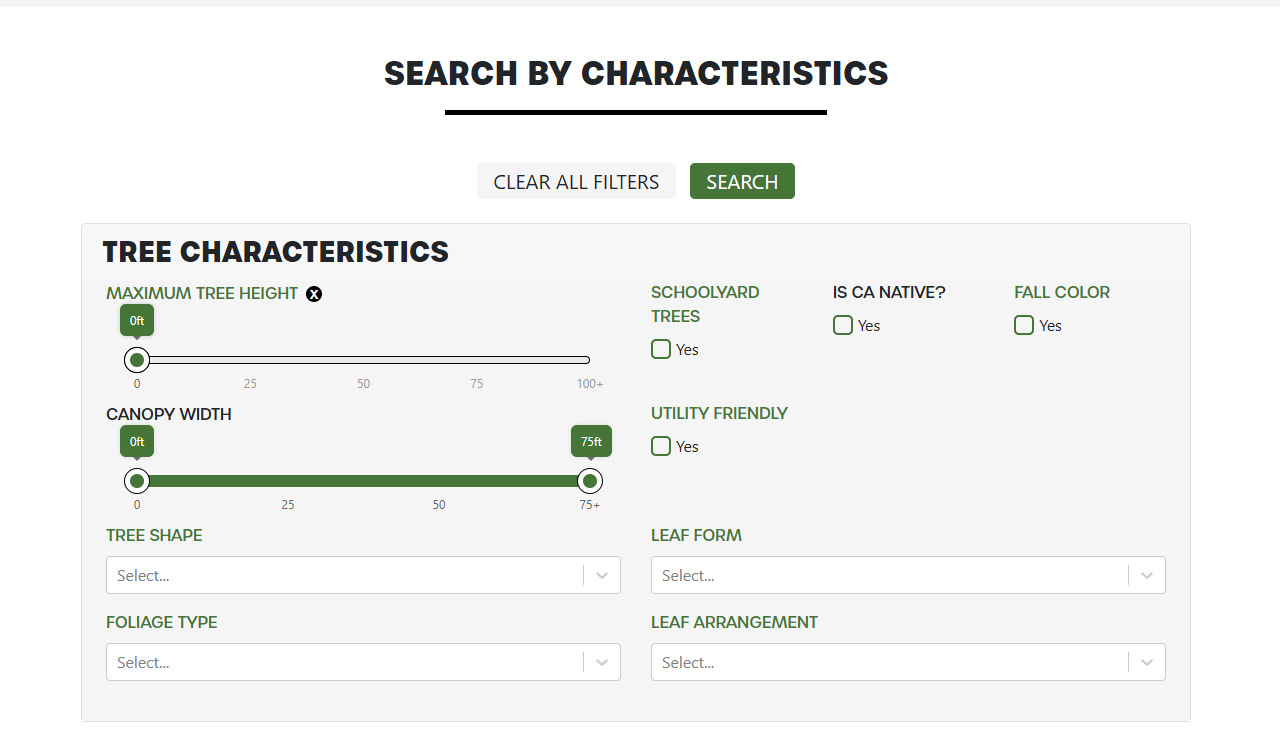
SelecTree Database:
Cal Poly SLO’s UFEI team has developed a searchable tree database with information on thousands of tree species grown in California.
SelecTree Lists:
SelecTree also has expert recommendations of tree species that are the future for urban forestry in California due to their climate-adaptations and resilience.
Check out these webpages for even more information
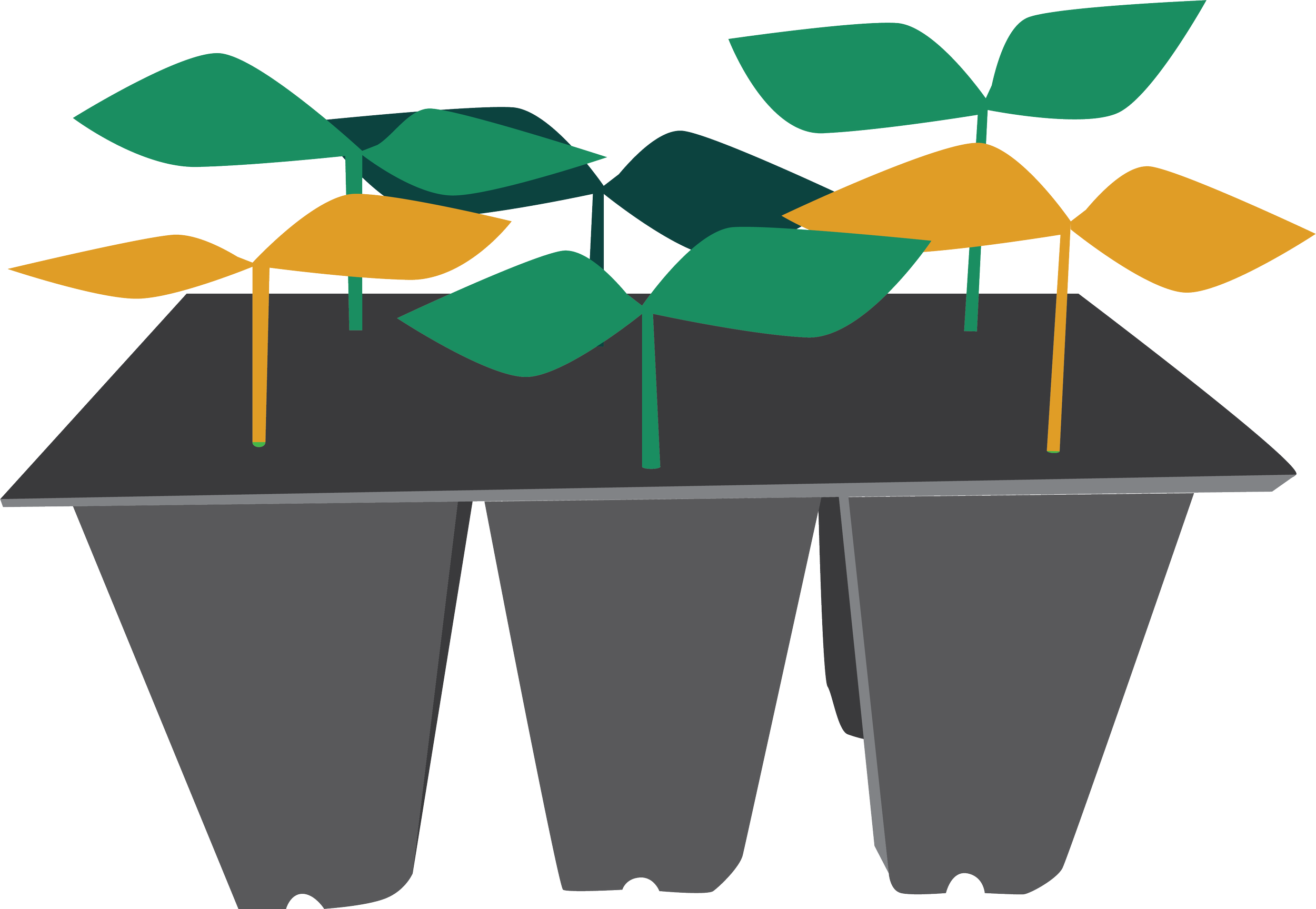
Growing plants in a nursery
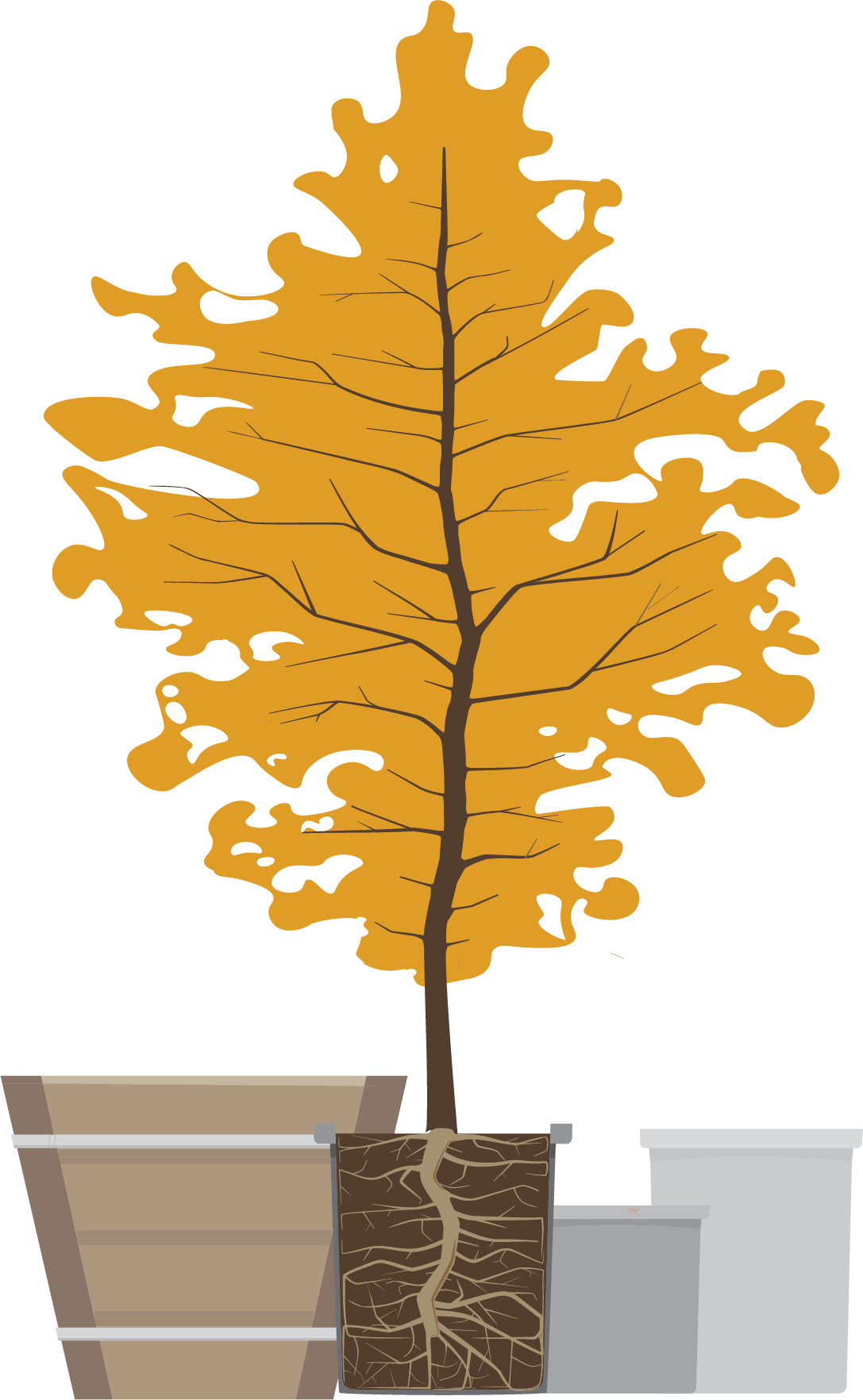
Buying a high quality tree
Planting a tree
Caring for a young tree
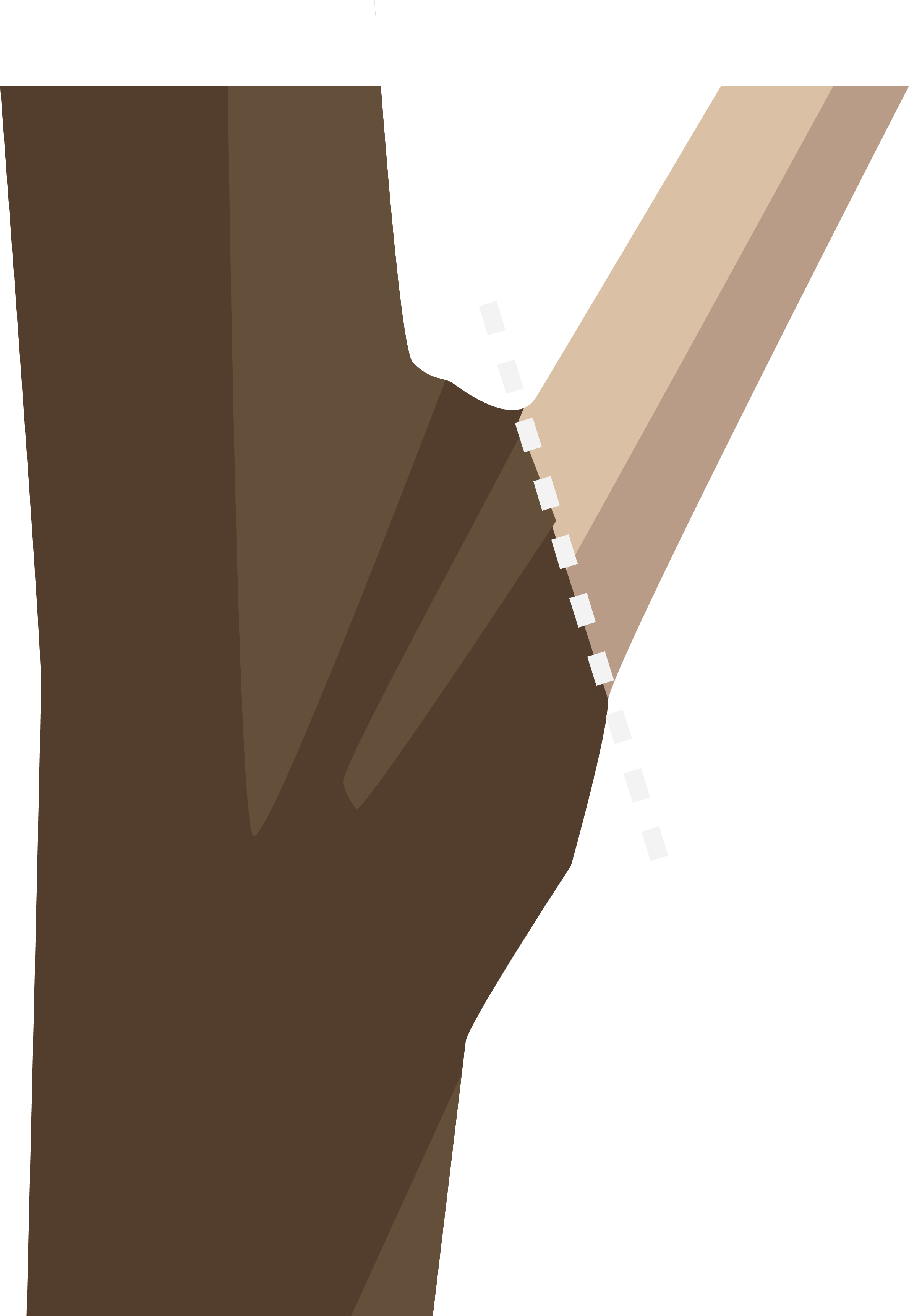
Pruning at a tree at all ages