
Increasing Clearance
Lower branches often have to be removed to clear them from traffic, to prune them away from a building or walk, make signs visible that were installed too far off the ground, or open up a desirable view. Shortening or thinning limbs in large trees is preferred over removal because of the negative health impacts of large limb removal.
Avoid the following when raising the crown:
removed limbs are not too large (preferably less than four inches in diameter)
not all branches are removed at one time
many branches are not removed from the same spot
The easiest way to raise a crown is to structurally prune a tree over time to keep low branches small.
A word of caution:
Removing too many low branches shifts future growth to the top of the tree. Wind is stronger there, and with no low branches, crown movement at the top of the tree can not be counter-acted, or damped, by the removed lower branches. Too much raising also causes dysfunctional wood leading to cracks and possibly decay inside the trunk. Removing too many lower branches can result in sunburn on the lower trunk and causes sprouting on the trunk and remaining limbs.
The trees to the right have been pruned too high, with less than 60% of the trunk covered with live branches. Trees should not be pruned up beyond the necessary clearance height.
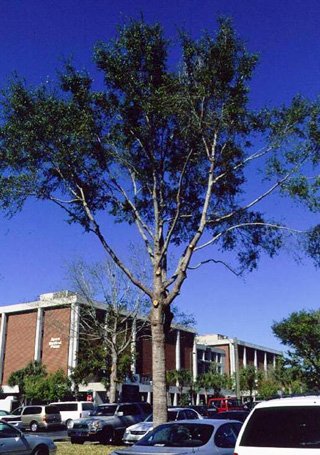
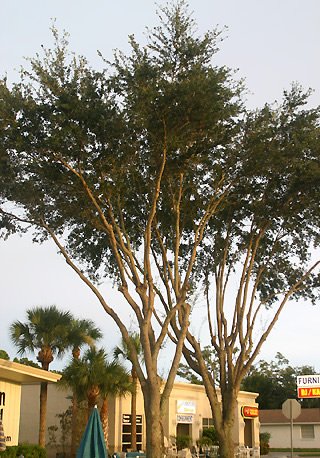
The live crown ratio should be at least sixty percent, meaning that there should be live branches along the upper sixty percent of the trunk to distribute wind stress and develop trunk taper for stability and strength. Some major branches should be left on the lower one-half of the trunk. Similarly, half the foliage on scaffold limbs should originate from secondary branches on the lower two-thirds of these limbs where practical.
Lions-tailing is not synonymous with crown raising and is considered inappropriate pruning. Removing up to about fifty percent of the foliage and associated branches from the lower crown on conifers has little impact on subsequent growth and movement in wind. In contrast, thinning the top half of the crown would have a greater effect.
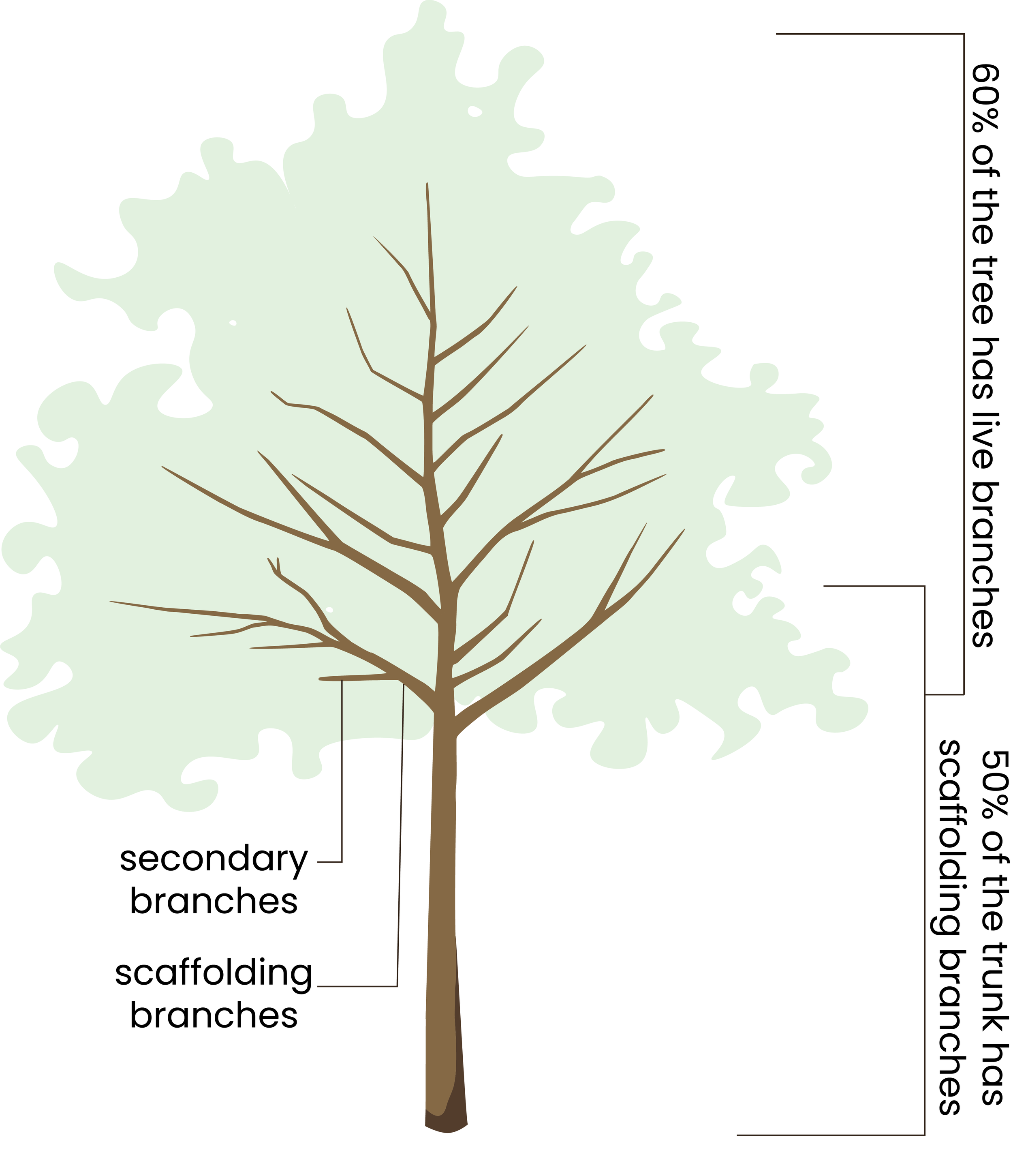
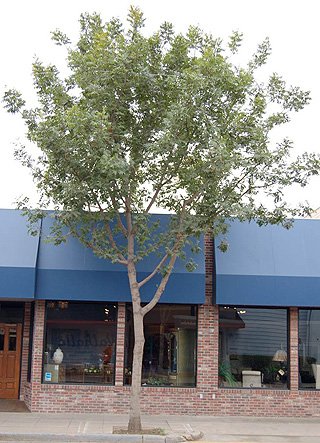
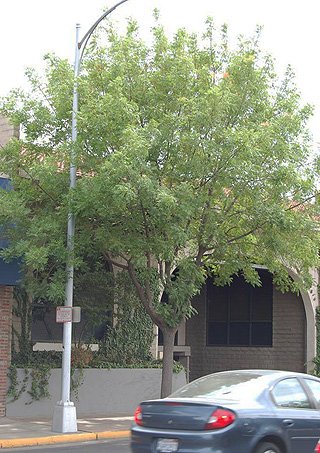
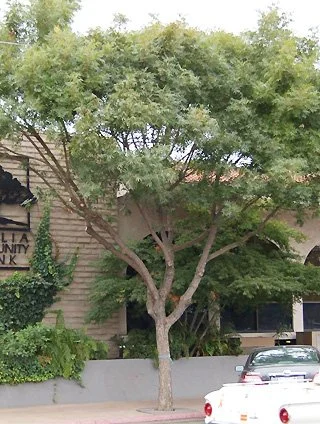
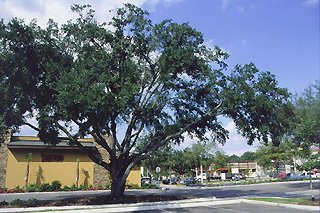
Structural pruning to create a tree with a single straight leader and proportionally small branches will make raising the crown easier and less damaging to the tree. Structural pruning allows trees to develop a form like those shown on the left, being easier to raise.
Pro Tip: Structural pruning helps raising the crown
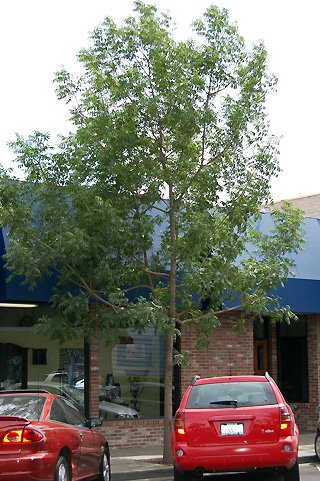
Most easy to raise
Dominant trunk, small branches
Easy to raise
Dominant trunk only one upright large branch; remove the large lower limb
Difficult to raise
Several codominant, upright stems
Very difficult to raise
Three wide-spreading limbs; retain branches to avoid large wound areas, resulting in poor defects and structural instability
What branches to cut?
Remove or shorten large low branches rather than secondary branches
Oak recently raised by removing secondary branches
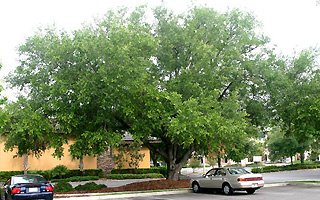
Oak four years later continues to provide clearance issues
To begin a program that will help solve the clearance issue, low limbs should be removed now, and those in the mid-crown shortened with reduction cuts. This encourages growth in the center and top portion of the crown which places the tree on a program aimed at a permanent solution. The goal is to eventually develop branches that will clear the vehicles without the need for large pruning cuts. Although removal cuts made now low on the trunk will be large causing some trunk dysfunction, they will be even larger years from now if the pruning shown above continues. Under the current program, low branches are forced to grow very long so they sag and droop because removal of interior branches is restricting development of taper.
Do not prune several large branches all at once
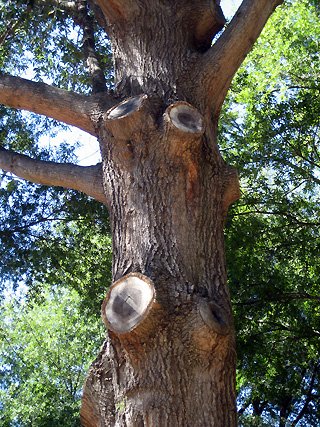
Recently— and overly— pruned tree
Several large wounds puts stress on the tree and exposes it to pathogens. The close-up of the trunk to the right shows six or seven fairly sizable removal cuts at the trunk. It's best for the tree if this large pruning dose is spread across more than one pruning event a year or more apart.
Better yet, a tree would have a regular regimen of structural pruning to prevent the occurrence of several large branches low on the tree.
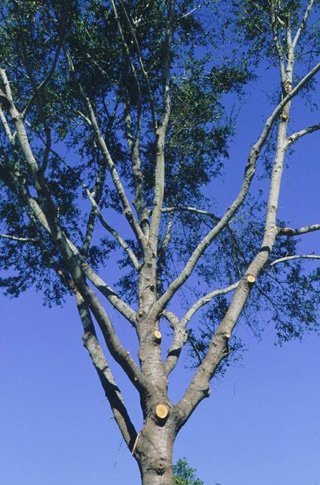
Close-up of oak
Recently-raised oak
Prioritize shorting a large limb to removing secondary branches
Instead of pruning the secondary branches along the lower portion of the two or three largest limbs in the lower crown, the ends could have been reduced in length. This would have helped provide long-term clearance under the tree by exposing branches growing from the leader to more sunligh, thus encouraging growth higher in the tree. Shortening these upright-growing branches also would have slowed their growth which prepares the tree better for their eventual removal. Pruning in the manner shown here also induces the poor form associated with poorly-tapered, long limbs.