
How to Plant a Tree
Planting a tree is an important step in the process of stewardship of the urban canopy. Tree planting can make or break the success of an urban tree. Here we provide details for how to give a tree the best shot at thriving in the urban environment.
Planting Step-by-Step
Selecting a Quality Tree
Planting quality trees begins by choosing vigorous, structurally sound trees from the nursery. Strong trees have straight roots, a thick trunk with taper, and a good branch structure appropriate for the species. Trees that become large at maturity are most durable when grown with one dominant trunk or leader to the top of the tree. The root collar or root flare (the point where the uppermost roots emerge from the trunk) should be in the top two inches of the root ball. Click the link below to a guide to selecting high quality nursery stock.
Making sure you have a quality tree before planting will save you a lot of time and effort.
Supplies Needed
the tree
shovel
wooden stakes
tree ties
flexible, non-abrasive materials used to secure the trunk to stakes while allowing movement
hammer and nails to attach the ties to wooden stakes
hard hat
post pounder
hand saw
pruners
tarp
step stool
gloves
a means to water the tree
organic mulch
a plan to remove stakes later on
trunk protector and a water bag that slowly releases water over several days
Digging the Hole
Your goal is to create a firm, flat-bottomed hole surrounded by loosened soil (Figure 1).
Dig a hole the depth of the root ball from the bottom of the root ball to the top of the first lateral root (or root flare). The hole should only be deep enough to position the top of the root ball even with the landscape soil surface. If the hole was dug too deep, add soil and pack with your feet, otherwise the tree can sink as the soil settles. Dig the hole a little wider than the container. You might have heard the rule to dig the hole 3 times the size of the pot. This is said so that you decompact and loosen all the soil around the tree giving the roots something to move into. We have found that most people do not do this and it is very challenging to remove and replace that much soil. Therefore, after planting, we recommend loosening the soil in an area three times the container’s width around the tree. This encourages roots to grow laterally into the surrounding native soil, which stabilizes the tree.
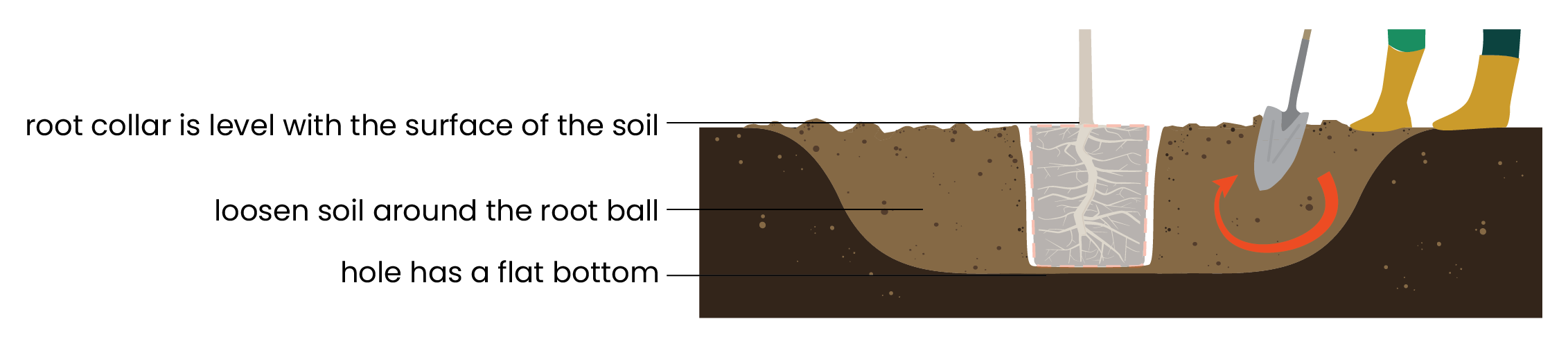
Figure 1: A well-dug hole
The root collar is level with the ground and the soil around the root ball has been loosened with a shovel. The bottom of the hole is flat and firm.
Addressing Root Collar Interference
If you see large roots (see chart in section below) circling around the side of the pot, this can indicate the tree is rather large for the pot. You should consider getting a higher quality tree. In some cases, roots larger than indicated in the chart can be pruned away by shaving the root ball (see next section) but remember that this is a sign of poor nursery practices. There could be similar issues inside the root ball which cannot be corrected at all.
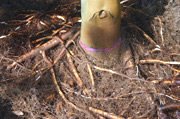
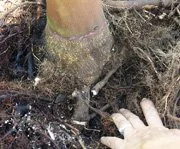
Roots growing over collar
Roots being pruned
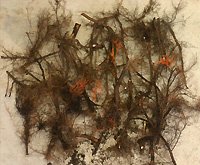
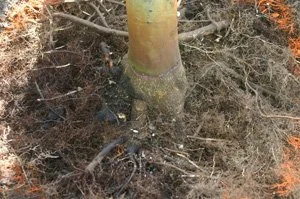
Roots removed from the top of the root ball following root pruning.
Root collar exposed
Figure 2: Roots growing over the root collar
Many roots grew up and over the original main structural roots of the root collar (upper left). Some of these roots touch the trunk, others circle the trunk; neither is good. The root collar is underneath. Cut and remove roots to expose the root collar.
Shaving the Root Ball
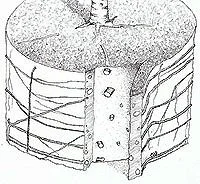
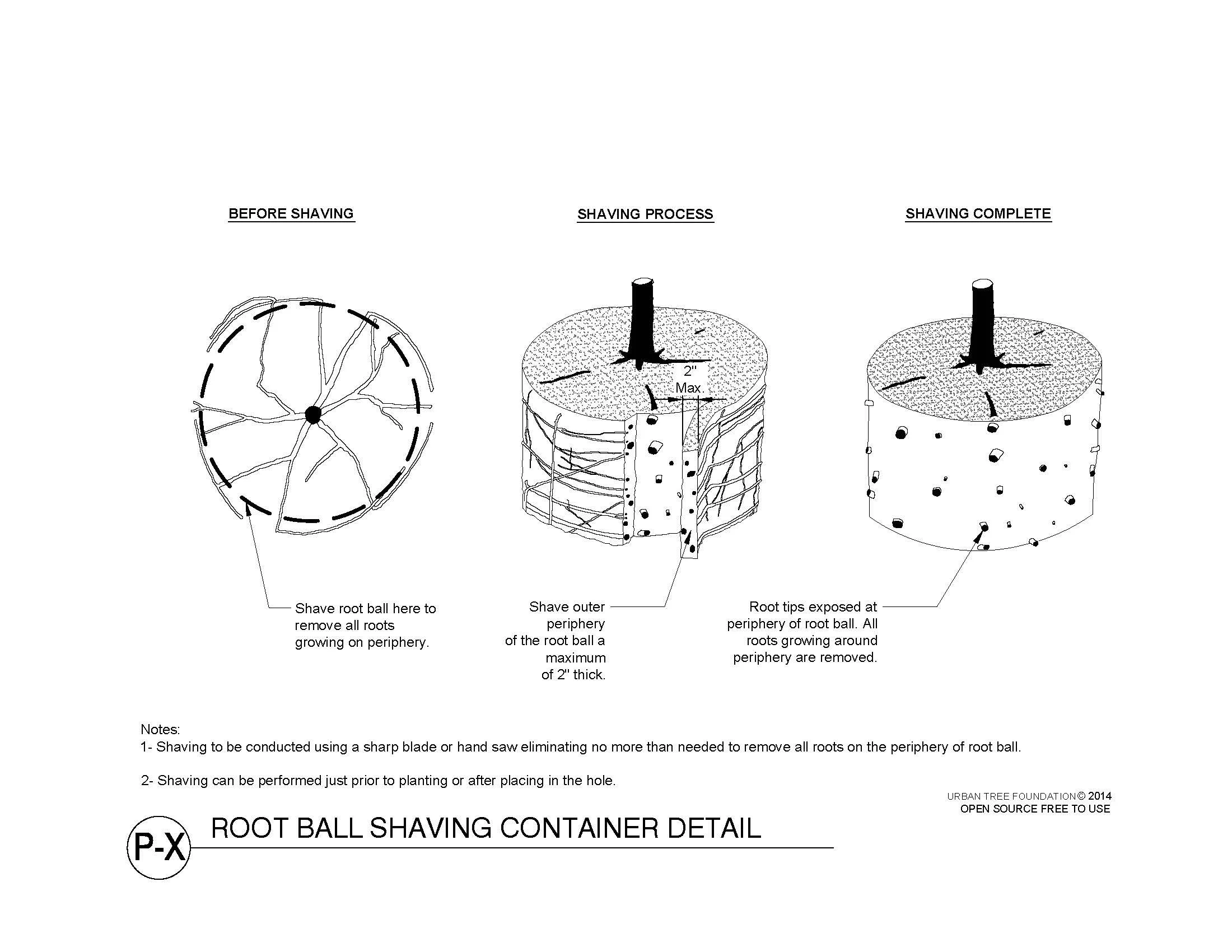
It is essential to remove all roots growing along the outer edge of the root ball from all container sizes. Removing the bottom is optional. The best way to accomplish this is to shave the root ball. The goal is to remove circling, bent, descending and ascending roots. This technique causes new roots to immediately grow horizontally and down into the backfill and landscape soil which quickly stabilizes the tree. Trees take longer to establish where root balls are not shaved at planting.
You can shave the root ball either outside the hole with a pruning saw or you can place the tree in the hole and use a shovel to slice the outer 1 - 1.5 inches away from the tree (Figure 3). This is the method we recommend.
Have a friend stabilize the tree while you use a curved or sharp rectangular tree digging shovel to shave the sides of the root ball. As an alternative, stabilize the root ball in the hole at the correct depth using the soil that came out of the hole. Fill about ¾ of the hole and pack gently. Now insert the shovel on top of the root ball edge and push down to shave off the edge of the root ball. Repeat until you have worked your way around the entire root ball. The severed roots can be left in the ground. New roots quickly grow outwards from the cut roots and into the loosened backfill soil and landscape (Figure 3). Slicing up and down the root ball is less effective than shaving.
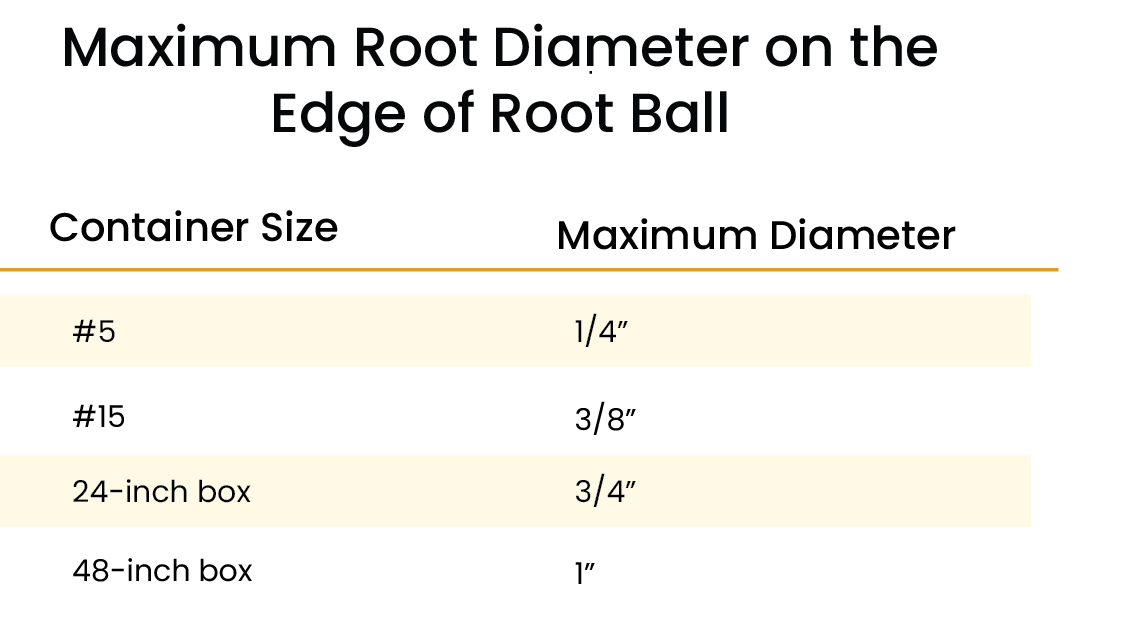
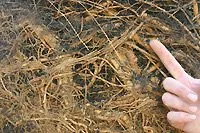
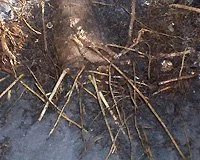
Figure 3: Shaving the root ball
Many large roots growing on the root ball edge (left). The outer one inch is severed from the root ball by shaving (center). This exposes cut root stubs behind the pruned roots which quickly grow new roots into the landscape soil (right)
Installing the Tree
De-compacting and filling
Position the tree so any natural trunk bend faces into the prevailing wind and/or align the upper canopy in the preferred direction. After cutting away roots growing over the root collar, set the ball into the hole and position the top of the root collar even with or slightly above the surrounding soil grade. Some soil may have to be added or removed from the bottom of the hole to set the ball at the correct height.
Loosen an area three times as wide as the root ball by turning and slicing into the landscape soil with a shovel and pushing it against the ball (Figure 4). This process ensures that large clods are broken up. For example, the loosened soil area around a 5-gallon tree should be about three feet in diameter. Roots will grow quickly into the backfill to begin the establishment process. If you have a narrow parkway, loosen the soil in lines moving away from the tree. Tree roots cannot penetrate soil that is more than 80% compacted, so the more turning you do, in the biggest area possible, the more anchorage your tree will have.
If the root ball was not shaved, go ahead and do that now as described above. Next, gently tamp soil against the ball with a foot to remove large air pockets and to ensure soil contacts the root ball without compacting the soil. Some planters use a ½-inch diameter plastic pipe on the end of a garden hose for this. Cover the root flare with no more than about one inch of excess container substrate, not soil. All roots should be covered, not exposed to the sun.
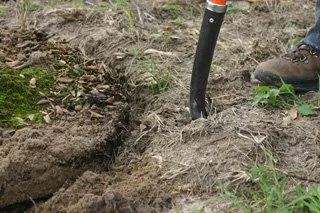
Figure 4: Backfilling the hole
Loosening undisturbed landscape soil around the root ball after positioning it at the proper depth.
Watering
Build a soil berm around the edge of the root ball and water thoroughly to fill the basin. Allow the water to soak in, then water a second time to fully wet the root ball and settle the surrounding soil. Apply a minimum of 5 gallons of water at planting. There is no need to apply fertilizer or soil amendments in most instances. Amending or completely replacing soil in a large area can benefit tree growth and health where inferior soil exists.
Mulching
A layer of organic mulch, such as leaf litter, shredded bark, or wood chips, helps protect tree roots from temperature extremes and conserves soil moisture. Do not use compost. Mulch also helps prevent grass and weeds from competing with the tree for water and nutrients. The mulched area makes it easier to operate mowers and weed eaters without hitting the trunk and compacting soil.
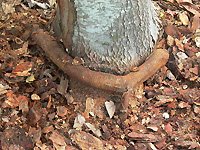
A 3- to 4-inch-deep mulch layer is best but apply only a thin layer of about one inch to the root ball surface for decorative purposes (Figure 5, right). Applying excess mulch on the root ball surface can repel water, retain water meant for the root ball, and encourage formation of stem girdling roots (Figure 5, middle and left).
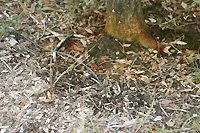
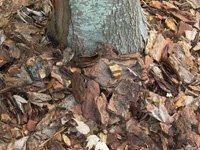
Poor
Mulch applied over the root ball and against the trunk invites roots to grow over the main structural roots and can form stem girdling roots.
Acceptable
Apply only about one inch on top of the root ball to allow water to flow in freely and to discourage roots from growing on top of the root flare (root collar).
Figure 5: Mulching technique
Apply only one inch of mulch over the root ball (right); the 3-4-inch thick layer should be applied from the edge of the root ball outward. Mulch applied too close to the trunk can result in roots growing close to the trunk-this can kill trees (left).
Staking
Staking temporarily stabilizes the lower trunk and root ball in the wind, so roots grow into the soil to support the root ball. Stakes also hold weak trunks from bending over. In most cases, use two stakes placed a couple of inches outside the root ball. Remove the nursery stake so the tree can move slightly, which encourages trunk strength.
If planting along a sidewalk, position stakes parallel to the street to reduce obstruction. In open areas where additional protection is needed, use three stakes. Drive stakes at a slight angle away from the tree and wear a hard hat for safety. Post pounders used to drive stakes into the soil can cause serious injuries!
Strap the tree to the stakes using tree ties or straps to secure the trunk at a point where it is straight. Ensure stakes are far enough from all branches to avoid bark damage in windy weather. If the trunk is too thin to stand upright, it may be tied to a light-gauge (5/16” diameter) metal rod or bamboo stake to straighten it. Avoid abrasion of the bark by securing the stake snugly alongside the trunk.
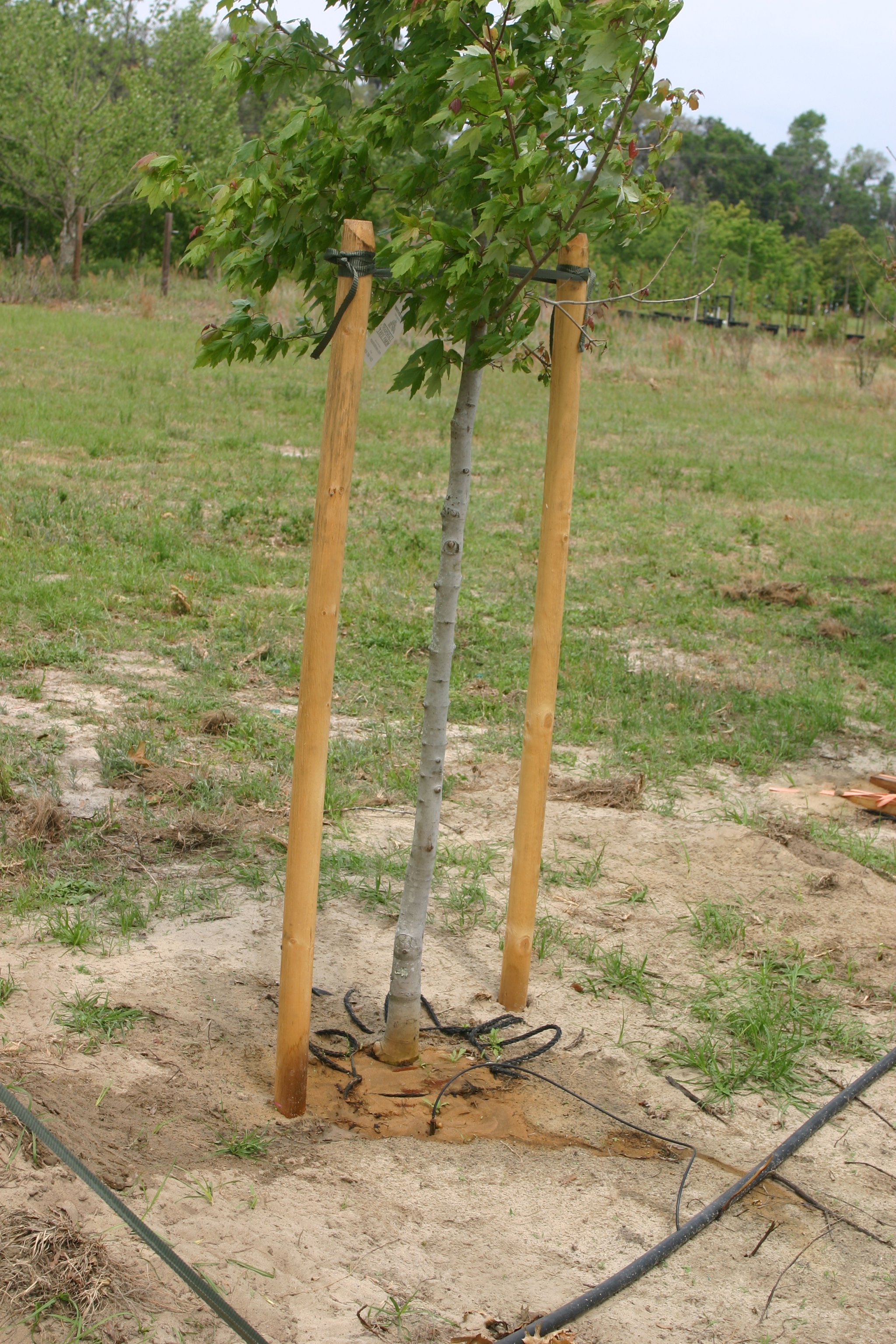
Figure 6: Staking
Irrigating
Consistent irrigation is critical for establishment.
Apply about three gallons of water per inch of trunk diameter to the root ball two or three times a week for the first growing season.
Increase volume and decrease frequency as the tree becomes established.
Weekly irrigation the second year and bimonthly irrigation the third year should be sufficient for establishment.
Once established, irrigation requirements depend on species, climate, and soil conditions.
Irrigation devices should be regularly checked for breaks and leaks.
Pruning
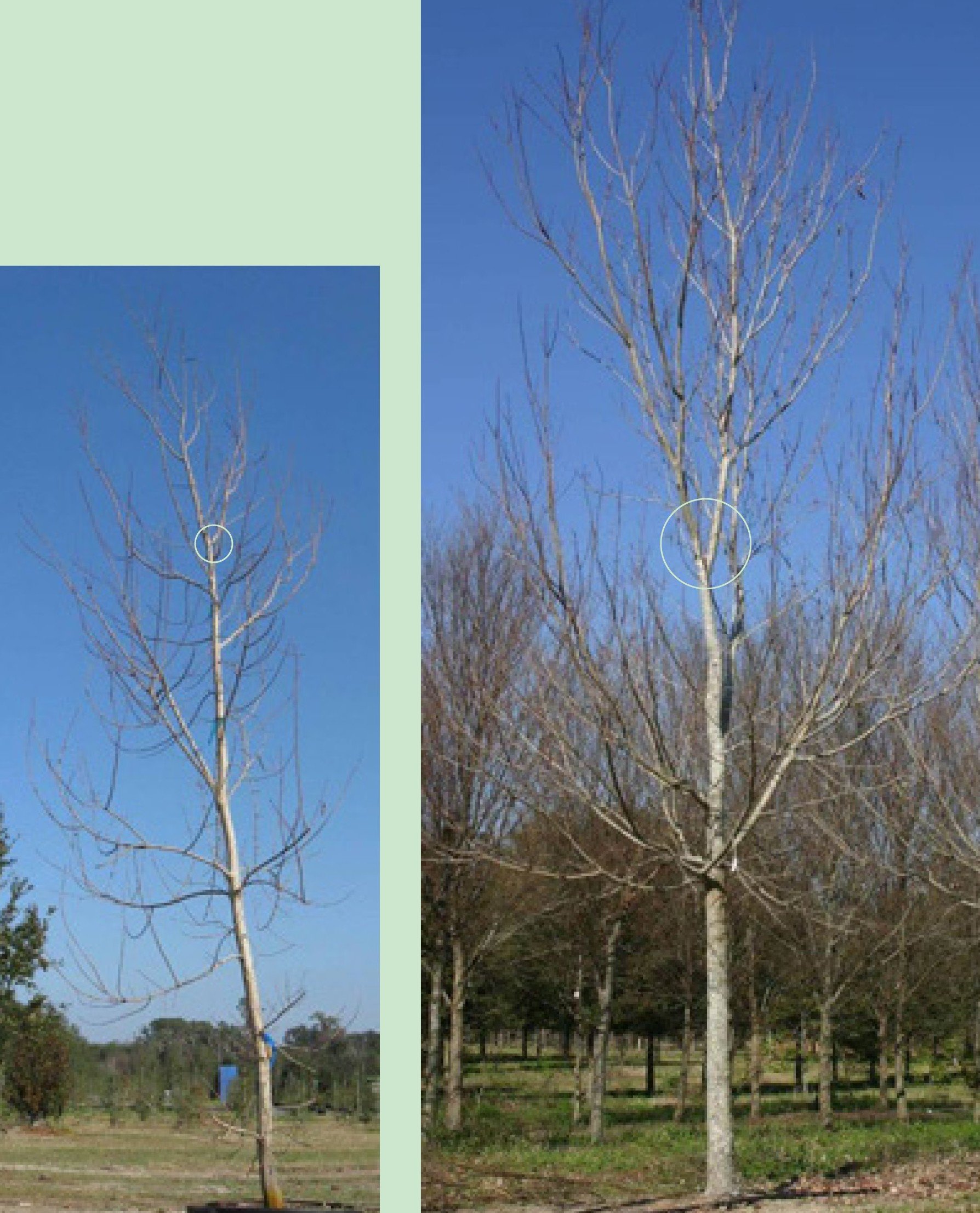
Why it matters: Trees in Figure 7 shows why trees should be pruned at planting. The codominant stems were present on the tree at planting (left) but they were not pruned. The right photograph shows the tree five years later. The architecture is weak due to the two co-dominant stems. This is avoidable.
Figure 7:
The tree on the left was planted into the ground. Notice the small current-year codominant stems at the very top of the tree. Photograph at right shows the tree five years later with codominant stems growing from what was the top of the original nursery tree. This is poor tree architecture, and it could have been prevented by pruning at planting. Structure is weak due to the two co-dominant stems. This is avoidable.
Even small diameter (pencil size) stems that are the same size as the leader can occur in the top half of the crown on high-quality nursery stock. These could eventually develop into one or more codominant stems (Figure 7, left) if they are not pruned at planting. Some pruning at planting is almost always necessary because it is unreasonable to ask growers to prune every tree with one perfect dominant leader to the very top of the crown.
Be prepared to develop good structure after planting if there are few nurseries that carry a particular species with suitable trunk and branch structure. Pruning can begin when the tree is planted. When you see that pruning is needed to correct trunk or branch defects on a freshly planted tree, and you will not be able to prune the tree for several years, prune it at planting to correct the problem. If you wait, it may develop defects that are more difficult to correct (Figure 8).
How to prune at planting.
Training young trees to one dominant trunk promotes durable architecture and overall tree health. To achieve this architecture, shorten or remove upright codominant stems that compete with the leader (Figure 8). If both stems are of equal diameter, pick one as the leader and reduce the length of or remove the other. Large-diameter branches – especially those in the bottom half of the tree – should be reduced in length using reduction cuts back to smaller lateral branches. In some cases, such as when they are larger than about half the trunk diameter, these can be removed from the trunk.
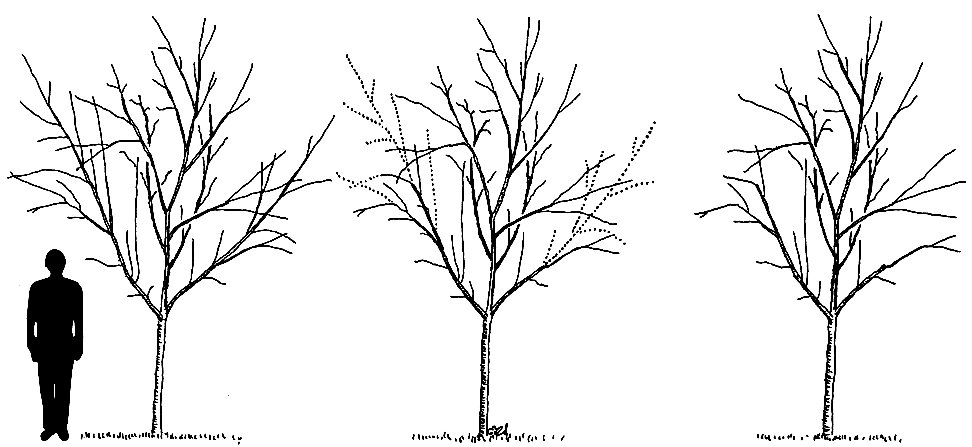
Figure 8: Before and after pruning
Before pruning there were three leaders (left). One was selected as the dominant central leader, and three were reduced in length using reduction cuts (center). After pruning there was a dominant leader in the center of the crown (right).
This approach (1) slows growth on the pruned branch and (2) allows more sunlight to reach the branches on the leader (Figure 9). Increased sunlight on the leader enhances growth on the leader; this is the objective. Pruning codominant stems and large-diameter branches in this manner encourages growth in the one leader you chose to be dominant.
Let’s look closely at one example in Figure 9. The high-quality nursery tree on the left has one dominant leader almost to the top of the tree. Two current-year stems are equally dominant in the very top of the crown, and there are many stems and branches just below this point that are growing upright. Unless pruned, these will form several codominant stems, all originated from the top of the original nursery tree. Prune at planting to eliminate these. Although reduction cuts are preferable, heading cuts are sometimes necessary when lateral branches are absent.
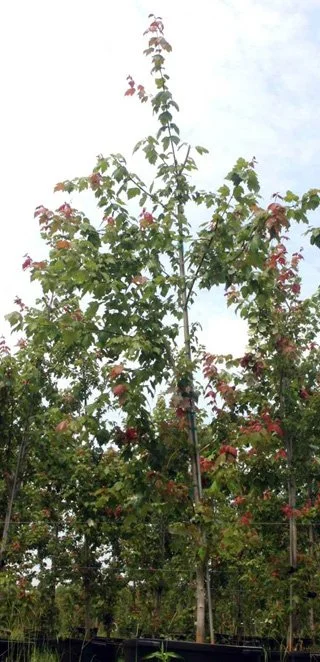
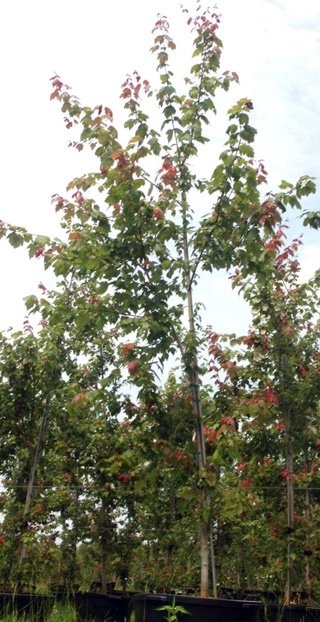
Figure 9: Before and after pruning
Pruning at planting leaves on dominant leader to the top of the tree. Heading cuts were used near the top of the tree because there were no lateral branches to cut back to.
The leader may not grow correctly when several branches are clustered together at one point on the trunk. In these cases, remove some (typically one or two) branches in the cluster entirely back to the trunk and reduce others so water and nutrients can reach the leader. A combination of reducing and removing fast-growing (the largest) branches clustered together forces growth in one dominant trunk.
Planting Details and Specifications
-
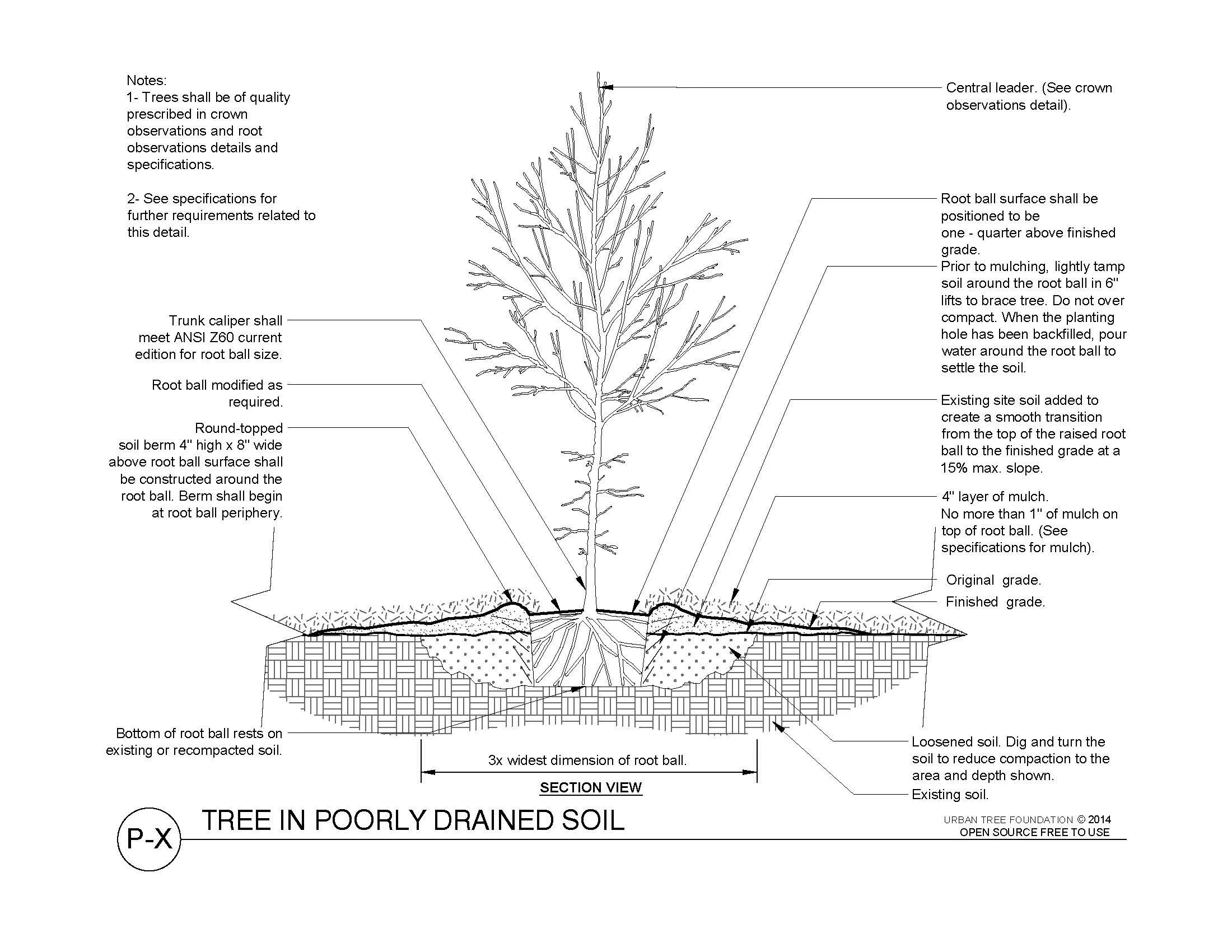
![A technical diagram showing the steps and specifications for planting a tree in poorly drained soil, including notes on soil preparation, root ball placement, and soil transition]()
Tree Planting
-
![A technical diagram of tree staking with instructions and measurements, divided into plan view and section view, showing lodge pole staking with rubber ties and removal instructions for nursery stakes.]()
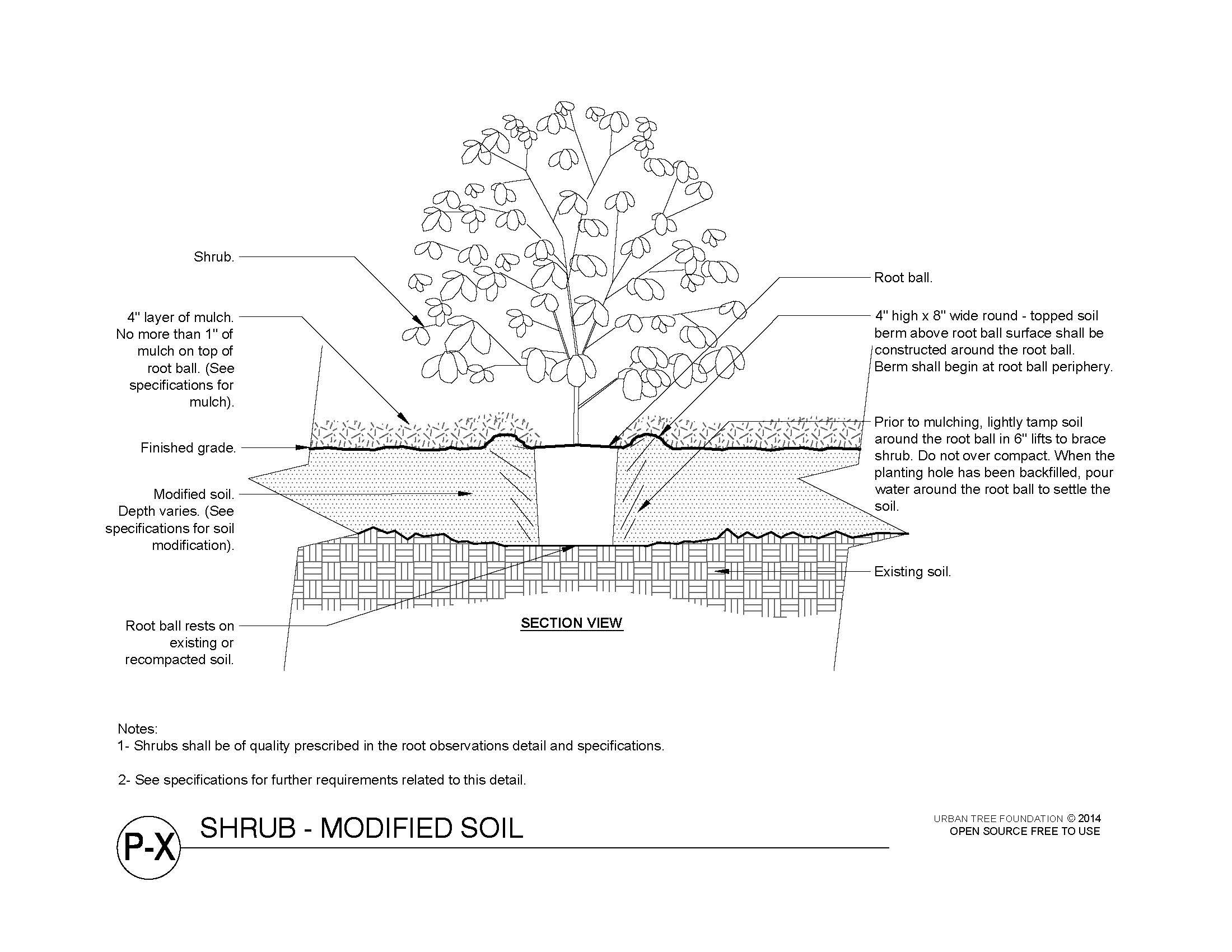
Shrub Planting
-
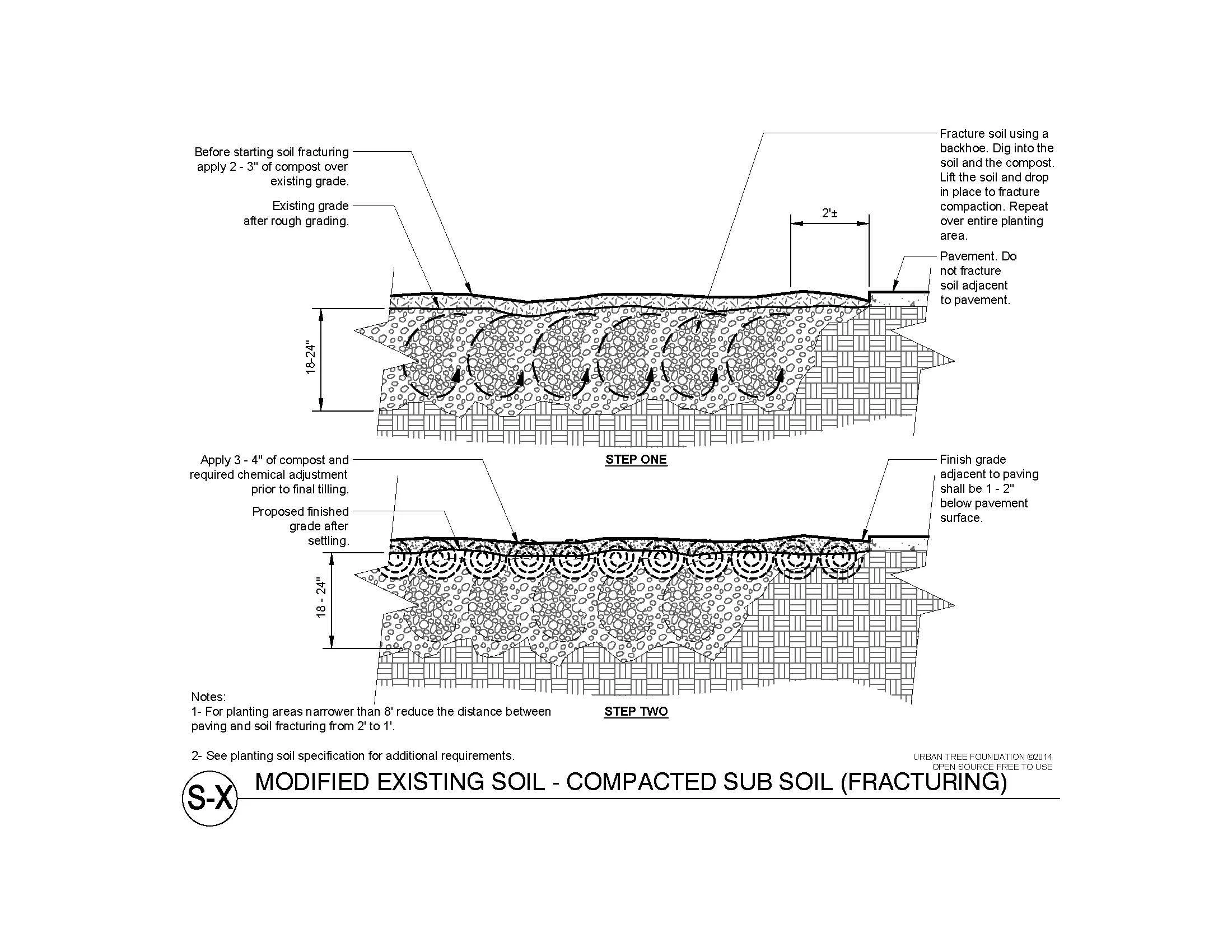
![Technical diagram illustrating steps for modified existing soil with fracture soil using a backhoe for soil fracturing and planting guidelines.]()
Planting Soil
-
![Technical diagram illustrating acceptable and rejectable crown observations for high-branch trees, showing branch aspect ratios and measurements.]()
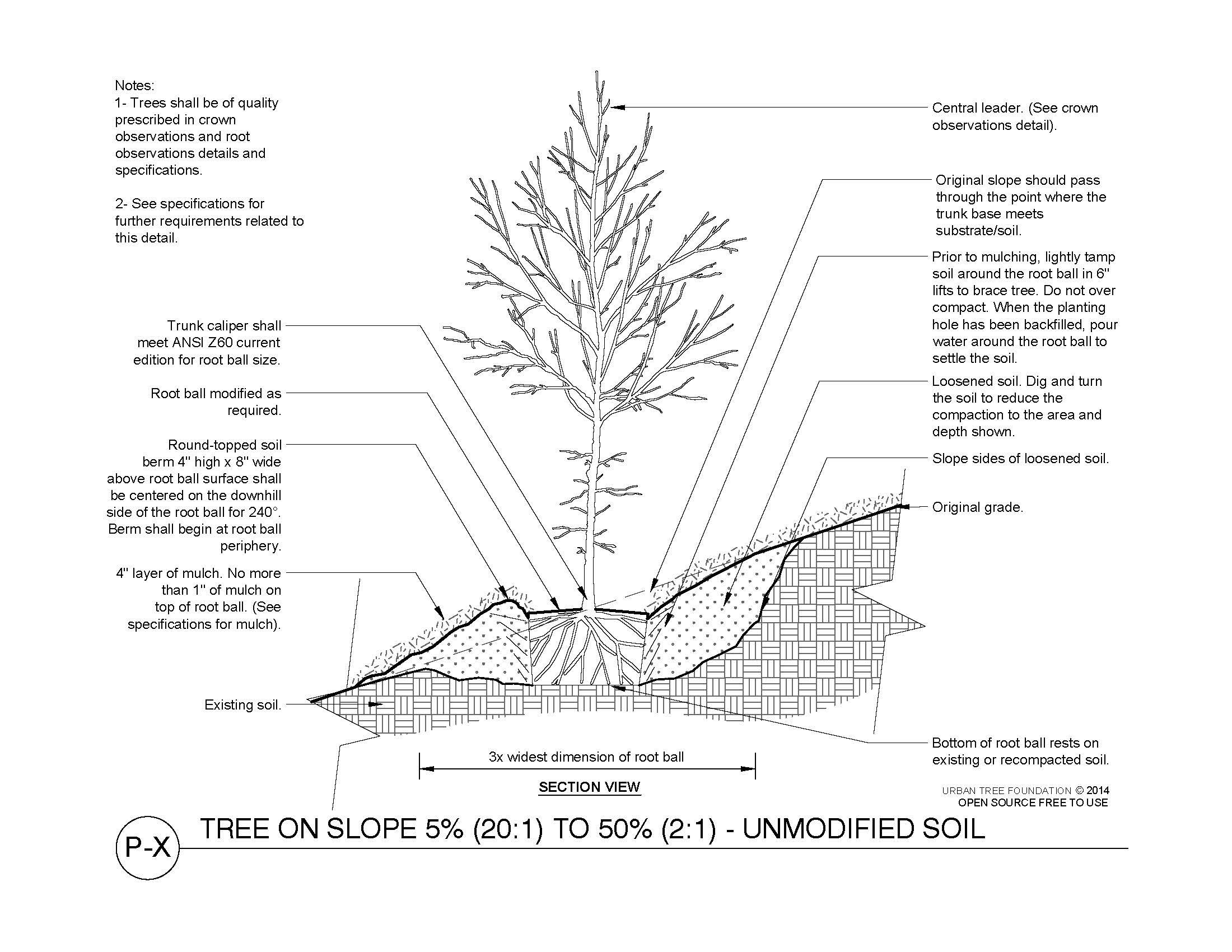
Planting on a Slope
-
![Technical diagram showing the process of root ball shaving, including removing roots from the periphery, shaving the outer perimeter, and exposing root tips at the periphery of the root ball.]()
Plant Corrections
-
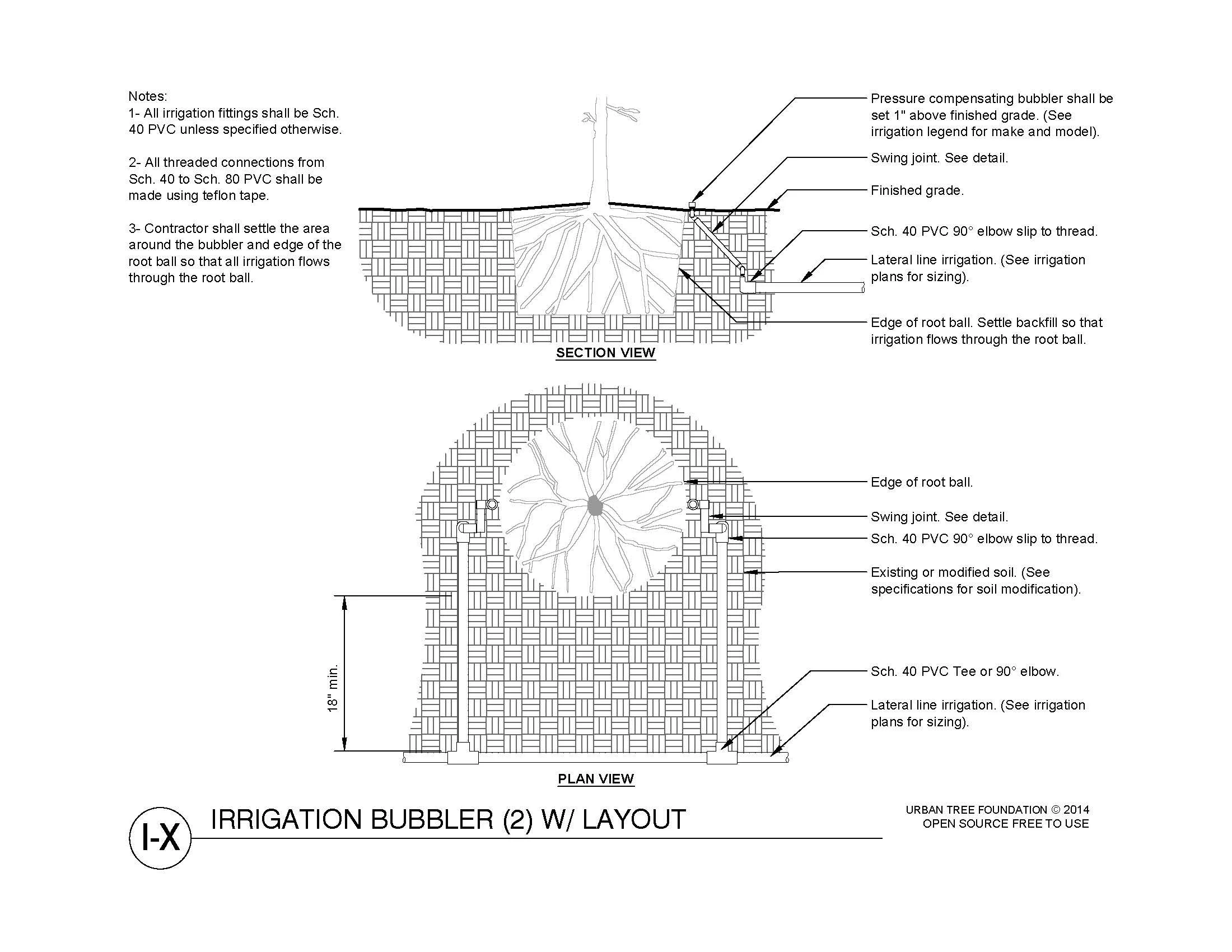
![Technical diagram showing irrigation bubblers with layout and plan views, with notes on installation specifications and components.]()
Irrigation
-
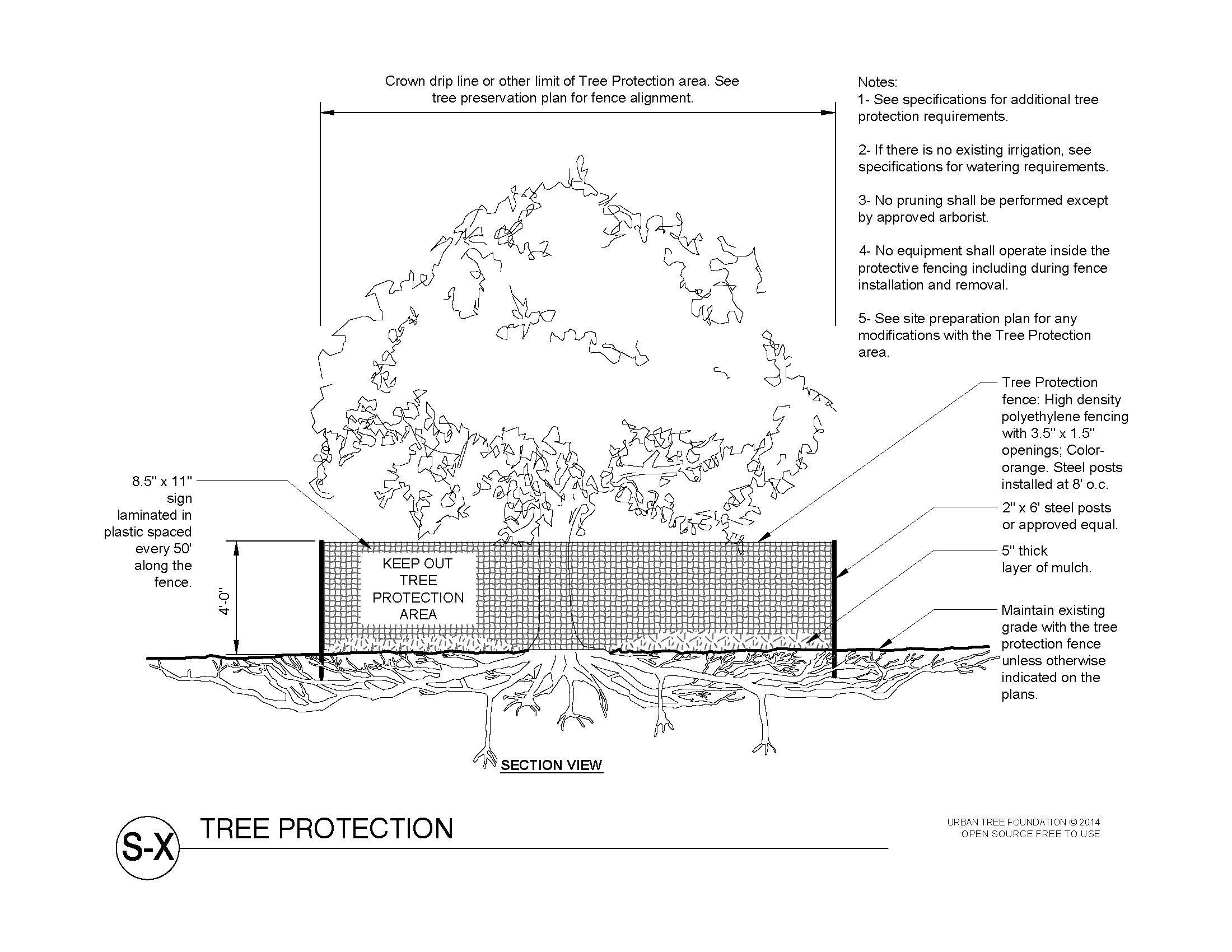
![Technical diagram illustrating tree protection measures in an urban area, including fencing with steel posts and mulch layer, with notes on specifications and site considerations.]()
Tree Protection
Check out these webpages for even more information
Growing plants in a nursery
Choosing a tree species
Buying a high quality tree
Caring for a young tree
Pruning a tree at all ages